
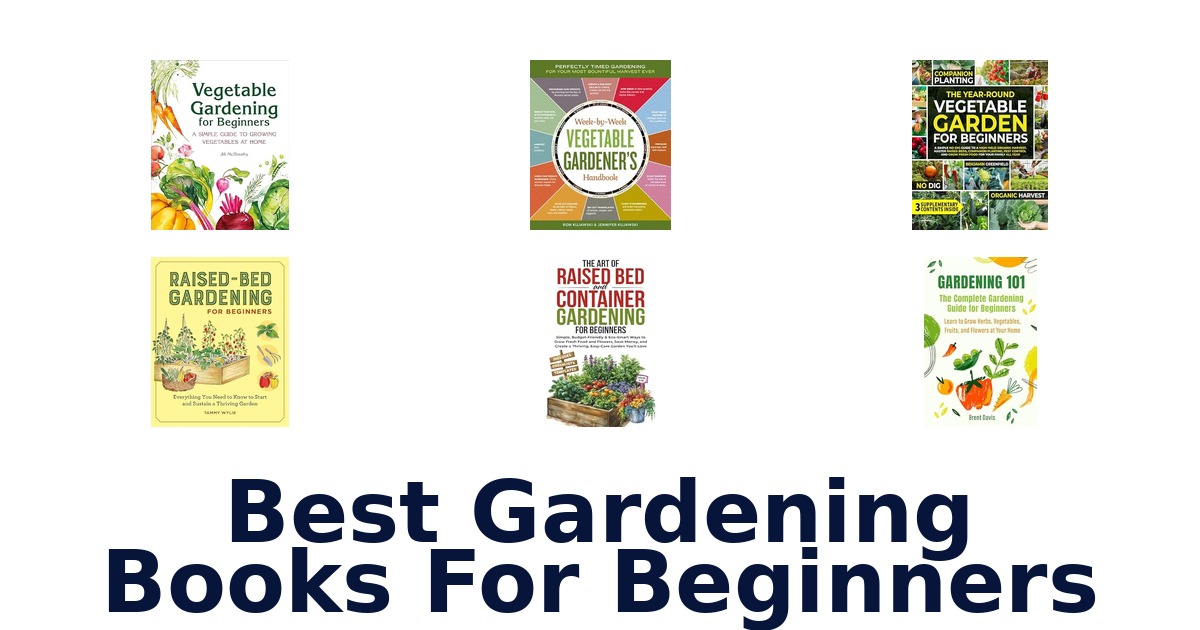
A strong gardening book for a beginner turns unfamiliar tasks into a clear plan, whether you want vegetables, raised beds, containers, or a broader home garden. The Old Farmer’s Almanac Vegetable Gardener’s Handbook is a strong starting point because it covers garden placement, soil checks, and planning around frost dates. Other picks focus on specific needs: a week-by-week notebook for timing, a no-dig approach for soil building, or guidance for small patios and balconies.
The books also vary in format, from paperback and hardcover to a spiral-bound planner. Match the subject and structure to the garden you actually have; a focused vegetable guide may be more useful than a broad reference, while a planner can help turn advice into timely tasks.
The Old Farmer’s Almanac Vegetable Gardener’s Handbook is the best overall choice for beginners who want practical vegetable-growing fundamentals. It addresses where to plant, how to assess soil with simple at-home tests, and how to plan around frost dates and seasonal signals. Those topics help a new gardener make decisions before planting and carry them through the growing season.
Choose a more specialized book if you need a no-dig method, raised-bed instruction, or week-by-week task planning.
Our Top Picks
 Best Overall
Old Farmer's Almanac Vegetable Handbook
It covers garden placement, simple at-home soil tests, and planning around frost dates, giving beginners practical decisions to make before and during planting.
View on Amazon Best Starter Guide
Vegetable Gardening for Beginners
Its title and description directly target beginners, with a simple guide to growing vegetables at home and introductory coverage of fruits and herbs.
View on Amazon Best No-Dig Method
It explains no-dig and sheet-mulching soil methods, companion planting, succession planting, and step-by-step profiles for more than 15 vegetables.
View on Amazon- Best Garden Planner Week-by-Week Vegetable Gardener's Handbook
- Best Raised Beds Raised-Bed Gardening for Beginners
Compare These Beginner Gardening Books
| # | Product | Buy |
|---|---|---|
| 1 | 1. Old Farmer's Almanac Vegetable HandbookBest Overall | View on Amazon |
| 2 | 2. Vegetable Gardening for BeginnersBest Starter Guide | View on Amazon |
| 3 | 3. Year-Round Vegetable GardenBest No-Dig Method | View on Amazon |
| 4 |  4. Week-by-Week Vegetable Gardener's HandbookBest Garden Planner | View on Amazon |
| 5 |  5. Raised-Bed Gardening for BeginnersBest Raised Beds | View on Amazon |
| 6 |  6. Caroline Klyne Gardening GuideSmall-space garden planners | View on Amazon |
| 7 |  7. Companion Planting for BeginnersCompanion-planting learners | View on Amazon |
| 8 |  8. Gardening 101 Complete GuideAll-around home growers | View on Amazon |
| 9 |  9. Complete Gardener's GuideAll-in-one garden starters | View on Amazon |
| 10 |  10. Monty Don Complete GardenerBroad gardening enthusiasts | View on Amazon |
Detailed Reviews: Best Gardening Books For Beginners
#1 · Best Overall
1. Old Farmer's Almanac Vegetable Handbook
Best for: Vegetable garden planners.
Why it ranks #1: It covers garden placement, simple at-home soil tests, and planning around frost dates, giving beginners practical decisions to make before and during planting.
Planning guidance starts before seeds reach the soil, helping beginners think about where vegetables will grow and how to use sunlight. The Old Farmer’s Almanac Vegetable Gardener’s Handbook also addresses soil testing, frost dates, and nature’s seasonal signals, connecting early decisions with practical steps toward a vegetable harvest.
Its advice to plan planting locations, including movable containers, helps gardeners make use of available sunlight before sowing. Simple at-home soil tests offer a way to assess garden ground each season, while attention to frost dates and nature’s signals helps inform when to plan. Together, these topics give beginners a sequence to work through: consider the site, understand the soil, then account for seasonal timing. The book focuses on growing vegetables rather than gardening more broadly.
- Planning advice begins before seed hits the soil
- Covers movable containers as a way to use sunlight
- Includes simple at-home soil tests for each season
- Addresses frost dates and nature’s planting signals
- Its stated focus is vegetable gardening, not a broad guide to every garden type.
Skip it if you want a guide spanning herbs, fruits, and flowers; Gardening 101 covers those alongside vegetables.
A good fit for beginners mapping out a vegetable plot, checking their soil, and learning to consider frost timing. Choose it for its practical vegetable focus; it is less suited to readers seeking a guide to many kinds of gardening.
Listed on Amazon as: The Old Farmer's Almanac Vegetable Gardener’s Handbook: Essential Step-by-Step Advice for Growing Vegetables and Achieving Success
View on Amazon#2 · Best Starter Guide
2. Vegetable Gardening for Beginners
Best for: First home vegetable gardens.
Why it ranks #2: Its title and description directly target beginners, with a simple guide to growing vegetables at home and introductory coverage of fruits and herbs.
A simple home-growing guide is the appeal of Jill McSheehy’s Vegetable Gardening for Beginners, which presents growing vegetables as an accessible starting point. Its description also includes fruits and herbs, giving new gardeners a little more range than the vegetable-focused title alone suggests while keeping the emphasis on getting from dream to harvest.
The guide is presented as easy guidance for beginners growing a vegetable garden at home, making it relevant to readers starting from scratch. Its description extends the subject to fruits and herbs, which can help readers interested in more than vegetables consider a wider home food garden. The stated path from dream to harvest signals an end-to-end orientation, although the supplied details do not identify particular crops, techniques, or planning tools.
- Offers easy guidance for beginner vegetable gardeners
- Focuses on growing food at home
- Also mentions fruits and herbs
- Frames the process from initial idea to harvest
- The supplied information does not specify particular crops or gardening techniques.
Skip it if you want a named no-dig method and profiles for over 15 vegetables; The Year-Round Vegetable Garden for Beginners lists both.
This suits a first-time home gardener seeking a simple introduction to vegetables, with fruits and herbs also within the stated scope. The supplied description does not spell out specific methods, so it best fits readers seeking a broad starting point.
Listed on Amazon as: Vegetable Gardening for Beginners: A Simple Guide to Growing Vegetables at Home
View on Amazon#3 · Best No-Dig Method
3. Year-Round Vegetable Garden
Best for: No-dig vegetable beginners.
Why it ranks #3: It explains no-dig and sheet-mulching soil methods, companion planting, succession planting, and step-by-step profiles for more than 15 vegetables.
No-dig and sheet-mulching methods let beginners build fertile soil with less digging, making this guide a practical match for gardeners who want to reduce back-breaking groundwork. Its year-round vegetable focus also brings companion planting, succession planting, and step-by-step profiles for more than 15 popular vegetables into the picture.
The no-dig and sheet-mulching approach aims to build fertile soil with a fraction of the effort of digging, a useful starting point when establishing beds. Companion planting and succession planting connect plant choices with natural pest control and a continuous harvest. Step-by-step profiles for over 15 vegetables, including tomatoes, carrots, zucchini, and kale, provide crop-specific guidance. Together, these topics make the book particularly relevant to beginners pursuing an organic vegetable garden across the year.
- Explains no-dig and sheet-mulching techniques
- Connects companion planting with natural pest control
- Covers succession planting for a continuous harvest
- Includes step-by-step profiles for over 15 vegetables
- Its stated emphasis is organic vegetable growing, not a general guide to ornamental gardening.
Skip it if you want guidance across herbs, fruits, and flowers as well as vegetables; Gardening 101 covers those garden types.
Choose this for a beginner focused on organic vegetables, soil-building without back-breaking digging, and planning successive crops. The crop profiles and planting methods support that specific aim; readers looking for a broad guide to flowers and other garden types may prefer another scope.
View on Amazon#4 · Best Garden Planner
4. Week-by-Week Vegetable Gardener's Handbook
Best for: Weekly garden schedulers.
Why it ranks #4: Weekly checklists cover seed starting through harvesting, and the customizable planner helps readers calculate tasks around their last frost date.
Weekly checklists organize gardening tasks from late-winter planning through early-winter harvests, giving beginners a calendar-shaped workflow across the seasons. This spiral-bound handbook also includes space for three years of notes and helps readers calculate timing from their last frost date, making regional scheduling part of its practical appeal.
The week-by-week structure covers seed starting, planting, crop maintenance, and harvesting, turning seasonal work into a sequence of tasks to follow. Since gardening dates vary by region, guidance on determining the last frost date and calculating optimal timing helps readers adapt that schedule locally. A working notebook with three years of note pages lets gardeners record their own observations over time, supporting a repeatable planning routine rather than relying on a fixed calendar alone.
- Provides weekly checklists across gardening tasks
- Covers the season from late-winter planning to early-winter harvest
- Helps readers determine last frost and calculate timing
- Includes three years of note-taking pages
- Its schedule requires readers to adapt task timing to their own region.
Skip it if you prefer flexible guidance over a week-by-week planner; The Complete Gardener’s Guide is framed around broader gardening stages.
A useful fit for beginners who want to schedule seed starting, planting, maintenance, and harvest across the year. Its regional timing guidance and note pages support customization, but readers should be ready to determine their own last frost date.
Listed on Amazon as: Week-by-Week Vegetable Gardener's Handbook: Perfectly Timed Gardening for Your Most Bountiful Harvest Ever
View on Amazon#5 · Best Raised Beds
5. Raised-Bed Gardening for Beginners
Best for: Raised-bed garden beginners.
Why it ranks #5: This paperback is explicitly for beginners interested in raised-bed gardening, with sustainability and self-sufficiency highlighted in its title.
Raised beds are the clear focus of Tammy Wylie’s guide, making it relevant to beginners who have chosen that growing setup. The title also links the method with sustainability and self-sufficiency, framing the book for readers interested in growing through raised-bed gardening rather than seeking an all-purpose garden reference.
By centering raised-bed gardening, the book gives prospective beginners a defined format to consider instead of covering every kind of garden in its title. Its sustainability and self-sufficiency themes may help readers decide whether this approach fits their home-growing goals. The supplied information does not specify particular crops, bed-building instructions, or planting schedules, so the clearest supported benefit is its focused subject and stated purpose rather than any particular technique.
- Focuses specifically on raised-bed gardening
- Addresses beginners in its title
- Connects gardening with sustainability
- Frames growing around self-sufficiency
- The supplied information does not specify crops or practical raised-bed techniques.
Skip it if you need detailed no-dig methods and profiles for named vegetables; The Year-Round Vegetable Garden for Beginners lists those features.
Consider this if you are a beginner already interested in raised beds and want a guide framed around sustainability and self-sufficiency. The supplied details establish that focus, but not specific construction steps, crops, or schedules to expect.
Listed on Amazon as: Raised-Bed Gardening for Beginners: Your Guide to Growing Sustainability and Self-Sufficiency
View on Amazon#6
6. Caroline Klyne Gardening Guide
Best for: Small-space garden planners.
Why it ranks #6: It covers patios, balconies, and backyards with raised-bed and container setups, plus checklists, templates, and sample plans for beginners.
Raised-bed and container setups help make patios and balconies productive, giving small-space beginners options for growing where a traditional plot may not be the focus. Caroline Klyne’s guide also covers backyards, with clear instructions, checklists, templates, and sample plans to structure the path from soil preparation to harvest.
Its raised-bed and container ideas address patios, balconies, and backyards, helping readers think about how to use each available square foot. Clear instructions from soil preparation through harvest create a stepwise path, while quick tips and common-mistake guidance can help beginners handle decisions along the way. Checklists, templates, and sample plans add an organizing layer for keeping tasks on track. The book is especially pertinent to readers working with compact or varied home spaces.
- Covers raised beds and containers for small spaces
- Includes patios, balconies, and backyards in its settings
- Provides instructions from soil preparation through harvest
- Offers checklists, templates, and sample plans
- Its stated settings center on patios, balconies, and backyards rather than large-scale growing.
Skip it if you want a year-round vegetable schedule with weekly regional timing; Week-by-Week Vegetable Gardener’s Handbook provides that planner format.
A strong match for beginners planning a productive patio, balcony, or backyard, especially when containers or raised beds suit the available space. Its checklists and sample plans help organize the process, while its stated focus is home-scale gardening.
View on Amazon#7
7. Companion Planting for Beginners
Best for: Companion-planting learners.
Why it ranks #7: It focuses on pairing plants for a vegetable garden and presents companion planting as a chemical-free approach, making it useful for a specific beginner interest.
Pairing plants is the central subject of Brian Lowell’s Companion Planting for Beginners, giving new vegetable gardeners a focused way to explore how plant choices can work together. Its title also emphasizes a bountiful, chemical-free garden, appealing to readers who want to learn this particular approach rather than a general growing manual.
Because the book centers on companion planting, it gives beginners a defined topic to investigate as they plan a vegetable garden. The pairing approach connects plant selection with the goal of a bountiful, chemical-free harvest, making it relevant to readers interested in that style of gardening. The supplied details do not name specific plant pairings or explain particular methods, so buyers should treat it as a focused introduction rather than assume a particular list of combinations.
- Focuses on companion planting for beginners
- Applies plant pairing to vegetable gardens
- Names a bountiful harvest as a goal
- Emphasizes chemical-free gardening
- The supplied information does not list specific plant pairings.
Skip it if you want a broader sequence covering planning, sowing, planting, and growing; The Complete Gardener’s Guide covers those stages.
This is a focused option for a beginner curious about pairing plants in a vegetable garden and pursuing chemical-free growing. Its subject is narrower than an all-purpose gardening guide, and the supplied details do not establish which specific combinations it teaches.
Listed on Amazon as: Companion Planting for Beginners: Pair Your Plants for a Bountiful, Chemical-Free Vegetable Garden
View on Amazon#8
8. Gardening 101 Complete Guide
Best for: All-around home growers.
Why it ranks #8: Its beginner-focused title promises coverage of herbs, vegetables, fruits, and flowers at home, though the supplied details do not specify its methods.
Herbs, vegetables, fruits, and flowers all appear in the scope of Brent Davis’s Gardening 101, making it a broad home-gardening option for beginners who have not settled on one category. The title promises a complete guide to growing these plants at home, rather than limiting its focus to edible crops alone.
The range of herbs, vegetables, fruits, and flowers gives readers several directions to explore within one beginner guide. Because the title places that growing at home, its stated scope fits people starting gardens in a residential setting. This breadth may help a newcomer compare interests before choosing a narrower specialty, though the supplied information does not identify particular techniques, planting schedules, or space-saving methods for any of those plant groups.
- Covers herbs, vegetables, fruits, and flowers
- Addresses beginner gardeners
- Focuses on growing plants at home
- Offers a broad scope beyond vegetables alone
- The supplied information does not specify particular techniques or planting schedules.
Skip it if you need a vegetable calendar with weekly checklists and regional frost timing; Week-by-Week Vegetable Gardener’s Handbook lists those tools.
Choose this if you are a beginner interested in several kinds of home gardening, including flowers as well as edible plants. Its broad stated scope is useful for exploring options, while the supplied details do not establish crop-specific instruction.
Listed on Amazon as: Gardening 101 – The Complete Gardening Guide for Beginners: Learn to Grow Herbs, Vegetables, Fruits, and Flowers at Your Home
View on Amazon#9
9. Complete Gardener's Guide
Best for: All-in-one garden starters.
Why it ranks #9: The title describes a one-stop guide to planning, sowing, planting, and growing, but the supplied details do not establish specific beginner features.
A plan-to-grow sequence is the defining promise of The Complete Gardener’s Guide, taking readers from planning through sowing and planting to growing. Its one-stop scope can suit a beginner who wants those core garden stages collected in one hardcover guide rather than approaching each step as a separate topic.
The title’s four-part sequence—plan, sow, plant, and grow—gives a new gardener a clear framework for thinking through the work ahead. Planning comes before sowing, and planting precedes ongoing growth, so the stages help organize the process from intention to cultivation. The book is presented as a one-stop guide, which may appeal to readers seeking a single resource across those stages. The supplied details do not specify particular crops, techniques, or garden settings.
- Covers planning, sowing, planting, and growing
- Presents a one-stop guide to the gardening process
- Offers a clear sequence for organizing beginner tasks
- Hardcover format
- The supplied information does not identify specific crops or gardening methods.
Skip it if you need named vegetable techniques such as no-dig beds and companion planting; The Year-Round Vegetable Garden for Beginners covers those topics.
Consider this guide if you are new to gardening and want a single resource framed around planning, sowing, planting, and growing. Its listed scope is broad, but the supplied details do not establish crop-specific guidance or a particular gardening method.
Listed on Amazon as: The Complete Gardener's Guide: The One-Stop Guide to Plan, Sow, Plant, and Grow Your Garden
View on Amazon#10
10. Monty Don Complete Gardener
Best for: Broad gardening enthusiasts.
Why it ranks #10: It is described as a practical, imaginative guide to every aspect of gardening, but its supplied details do not identify beginner-focused instruction.
A practical guide to every aspect of gardening is the central promise of Monty Don’s The Complete Gardener, pairing practical and imaginative approaches in one hardcover book. That breadth may appeal to beginners who want to explore gardening as a whole rather than concentrate only on vegetable growing.
The title signals coverage across every aspect of gardening, giving readers a broad starting point when they have not yet narrowed their interests to a single crop or technique. Its practical and imaginative framing suggests a mix of hands-on and creative perspectives, which may suit someone exploring what gardening can involve. The supplied information does not name specific subjects, methods, or crops, so buyers seeking detailed guidance on a particular beginner task should weigh that uncertainty.
- Presents gardening as a broad subject
- Combines practical and imaginative approaches in its stated scope
- Suitable for readers exploring multiple aspects of gardening
- Hardcover format
- The supplied information does not name specific crops, methods, or gardening tasks.
Skip it if you need explicit steps for vegetable sowing, planting, and growing; The Complete Gardener’s Guide spells out those stages.
This may suit a beginner who wants a broad, practical and imaginative introduction to gardening rather than a narrowly defined vegetable manual. The supplied details do not identify specific techniques, so readers needing a particular task explained should consider that boundary.
Listed on Amazon as: The Complete Gardener: A Practical, Imaginative Guide to Every Aspect of Gardening
View on AmazonAvoid choosing a book that misses your garden type
The most common mismatch is buying a broad gardening guide when your immediate challenge is a specific growing setup. A beginner with a balcony may need the container and patio setups described by Caroline Klyne Gardening Guide, while a gardener committed to raised beds may prefer Raised-Bed Gardening for Beginners. For food growing, Vegetable Gardening for Beginners offers an introductory home-vegetable focus, and Year-Round Vegetable Garden goes further into no-dig soil building and succession planting.
These are not interchangeable approaches: a book centered on companion planting will not necessarily guide every part of garden planning, and a broad guide may not give the focused workflow a new grower needs. Before choosing, name the first project you intend to start, then check whether the book’s stated subject matches it.
This helps prevent a beginner from collecting broad advice without finding instructions for the actual space or method.
A planner cannot replace local timing decisions
A week-by-week schedule is useful only when you adapt it to your own frost dates and growing conditions. Week-by-Week Vegetable Gardener’s Handbook explicitly says gardening timing varies by region and guides readers in determining their last frost date; its checklists and three years of note pages support that local adjustment. The Old Farmer’s Almanac Vegetable Handbook also emphasizes frost dates and nature’s seasonal signals.
Treat either book’s guidance as a framework rather than assuming every calendar task applies on the same date everywhere. Another practical trade-off is format: the spiral-bound planner is designed for repeated reference and record keeping, while the other listed choices are paperback or hardcover books.
If you want a place to track tasks and observations, the planner has a clear advantage. If you mainly need explanations of soil, planting, or a particular method, choose a subject-focused guide and keep local dates in your own notes.
How to Choose a Beginner Gardening Book
Match the subject to your first garden
Choose a book whose main subject matches the garden you plan to start. The list ranges from vegetable-focused books such as Vegetable Gardening for Beginners and Old Farmer’s Almanac Vegetable Handbook to the broader Gardening 101 Complete Guide, which names herbs, vegetables, fruits, and flowers. Specialized options cover raised beds, companion planting, or patios and balconies.
A new grower who wants a broad introduction may prefer a wider scope, while someone already committed to vegetables can get more directly relevant guidance from a vegetable title. For a defined setup, select the raised-bed or small-space option rather than expecting a general guide to cover every detail.
Let your first growing project, not the broadest title, determine the subject.
Decide how much structure you want
Look for the level of step-by-step structure that will help you act rather than just read. Week-by-Week Vegetable Gardener’s Handbook provides weekly checklists for seed starting, planting, crop maintenance, and harvesting, as well as pages for three years of notes. Year-Round Vegetable Garden describes step-by-step profiles for more than 15 vegetables, while Caroline Klyne Gardening Guide includes checklists, templates, and sample plans.
These are distinct forms of support: choose the planner if you want recurring tasks and a record, the vegetable profiles if you need crop-by-crop guidance, or the templates if organizing a small-space setup is your priority. A reader comfortable making their own schedule may prefer a less explicitly planner-oriented guide.
Consider the growing method and format
Check both the gardening method and the physical format before choosing. Year-Round Vegetable Garden focuses on no-dig and sheet mulching, while Raised-Bed Gardening for Beginners is centered on raised beds and Companion Planting for Beginners on plant pairing. Those methods suit different plans, so do not assume one book covers them all.
Formats also vary: most listed books are paperback, Complete Gardener’s Guide and Monty Don Complete Gardener are hardcover, and Week-by-Week Vegetable Gardener’s Handbook is spiral-bound. The spiral-bound option may suit someone who wants to keep a planner open while working through weekly tasks; paperback or hardcover formats may better fit readers seeking a conventional book.
Select a format based on how you expect to use the guidance.
Which Gardening Book Should a Beginner Choose?
For a practical foundation in vegetable gardening, choose Old Farmer’s Almanac Vegetable Handbook: it covers placement, soil checks, and frost-aware planning. If you want a straightforward introduction to growing food at home, Vegetable Gardening for Beginners is the most direct match. Pick Year-Round Vegetable Garden if you are drawn to no-dig soil building and continuous harvest planning, or Week-by-Week Vegetable Gardener’s Handbook if checklists and a long-term notes section will keep you on track.
For a defined setup, choose Raised-Bed Gardening for Beginners for raised beds, Caroline Klyne Gardening Guide for patios or balconies, or Companion Planting for Beginners for plant pairings. Choose Gardening 101 Complete Guide for a broader range of home crops and flowers.
Frequently Asked Questions
Which gardening book is best for starting vegetables in containers or on a balcony?
Caroline Klyne Gardening Guide is the clearest match for patio or balcony gardening among these options. If your main goal is growing vegetables at home and you do not need a location-specific guide, Vegetable Gardening for Beginners offers a straightforward introduction. Consider your available space and preferred growing setup before choosing.
How can a beginner choose between a general gardening guide and a vegetable-specific book?
Choose a general guide if you want to explore a broader range of home gardening, including crops and flowers. A vegetable-specific book is a better fit when your immediate goal is growing food. For practical vegetable-growing fundamentals, the Old Farmer’s Almanac Vegetable Gardener’s Handbook covers planting location, soil checks, and frost-aware planning.
Do I need a gardening planner if I already have a beginner guide?
Not necessarily. A beginner guide can provide foundational advice, while a planner-style book may suit you if you benefit from scheduled tasks and keeping notes over time. Week-by-Week Vegetable Gardener’s Handbook is the option for checklists and a long-term notes section; choose it if that structure will help you stay on track.
Which book should I choose if I want to use a no-dig method?
Choose The Year-Round Vegetable Garden for Beginners if you are specifically drawn to no-dig soil building and planning for continuous harvests. For a more general foundation in vegetable growing, the Old Farmer’s Almanac Vegetable Gardener’s Handbook is the overall choice. Match the book to whether method or broad fundamentals are your priority.
Which book is suited to a defined setup like raised beds or companion planting?
For raised beds, choose Raised-Bed Gardening for Beginners; for guidance on plant pairings, choose Companion Planting for Beginners. These specialized options address different needs, so start with the setup or technique you plan to use. If you want broader vegetable-growing fundamentals instead, consider the Old Farmer’s Almanac Vegetable Gardener’s Handbook.
Final Words
For a practical starting point in vegetable gardening, choose the Old Farmer’s Almanac Vegetable Gardener’s Handbook: its guidance on placement, soil checks, and frost-aware planning supports decisions across the growing season. If you already know your preferred approach, choose a more focused book instead: no-dig growing, raised beds, balcony gardening, companion planting, or week-by-week tasks each have a dedicated option. Let your space and preferred level of structure guide the final pick.