
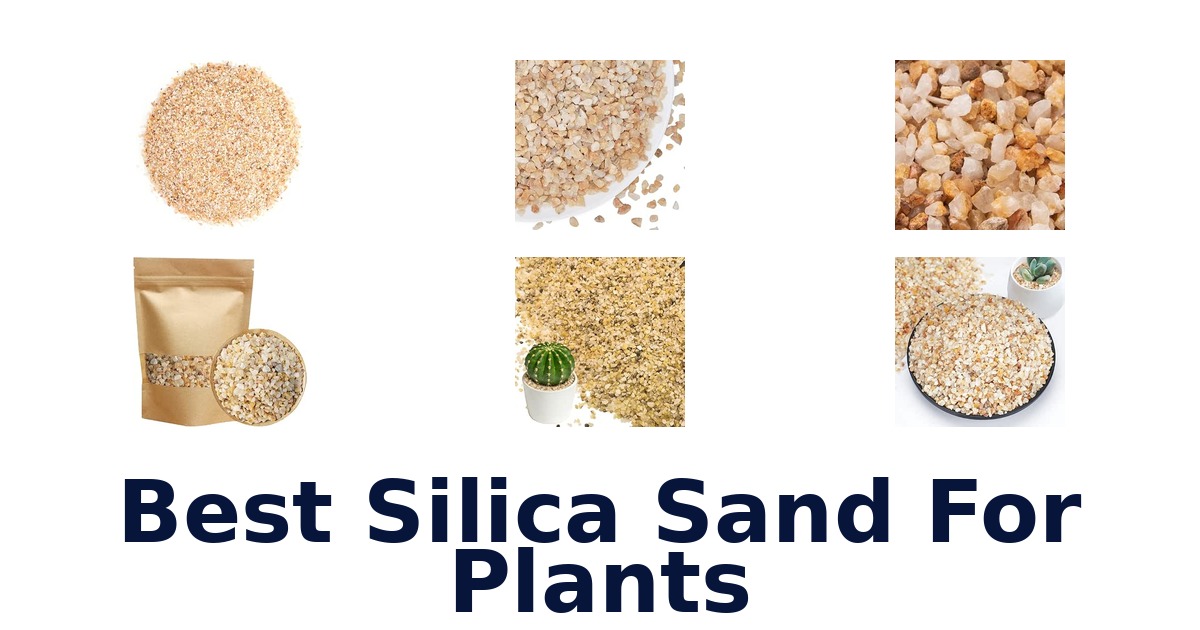
A strong silica sand for plants has a coarse, clearly stated grain size and suits the way you plan to use it, whether mixed into succulent soil or spread as a top dressing. BIOMAND’s 8-pound, 1–2 mm natural silica sand is a strong starting point for gardeners seeking a specified fine-coarse grain and a substantial supply. This roundup compares ten options, from 1–2 mm horticultural sand to decorative stones listed at 3–6 mm, with pack sizes ranging from 1 pound to 18 pounds.
Product descriptions vary: some identify natural silica, while others describe sand or stone more generally. Check the listed material and grain range against your intended use, and rinse dusty material before use when the product instructions call for it.
BIOMAND 1-2mm Horticultural Sand leads as the best overall choice because its listing identifies pure natural silica, gives a specific 1–2 mm grain size, and provides 8 pounds. The product is described for use as a soil additive, base layer, or top dressing, making it a versatile fit for plant care. If you need a different grain range or a larger pack, compare the other options below and verify that the material description suits your intended use.
Our Top Picks
 Best Overall
Its 8-pound pack is identified as pure natural silica with 1–2 mm grains, and the listing describes soil-additive, base-layer, and top-dressing uses.
View on Amazon Best Soil Amendment
Boniosz Silica Horticultural Sand
The 5-pound listing specifies 1–3 mm silica grit and describes mixing it into potting soil to improve aeration and drainage.
View on Amazon Largest Grain Range
This 6-pound product specifies natural silica in 3–5 mm grains and describes a 1:3 soil-mixing ratio for drainage and aeration.
View on Amazon- Largest Pack NUPICK 1-3mm Coarse Sand
Compare the silica sand options
| # | Product | Weight | Material | Form | Buy |
|---|---|---|---|---|---|
| 1 | 1. BIOMAND Horticultural SandBest Overall | — | sand | Granular | View on Amazon |
| 2 | 2. Boniosz Silica Horticultural SandBest Soil Amendment | 2.29 kg | — | — | View on Amazon |
| 3 | 3. NUPICK 3-5mm Coarse SandLargest Grain Range | 2.68 kg | sand | granular | View on Amazon |
| 4 |  4. NUPICK 1-3mm Coarse SandLargest Pack | 9.97 lb | — | — | View on Amazon |
| 5 | 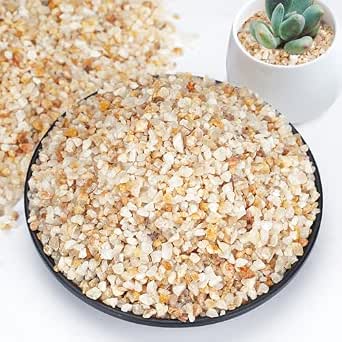 5. Rahato Coarse SandDrainage-minded indoor plant growers | 6 lb | lava rocks | granular | View on Amazon |
| 6 |  6. Lyrtrees Natural Silica SandSmall cactus potting mixes | 0.43 kg | Stone | Pebbles | View on Amazon |
| 7 |  7. GHYTMTHOT Coarse Sand StoneLarge-volume garden and display projects | 12 lb | Stone | Powder | View on Amazon |
| 8 |  8. TOYPOPOR Coarse Silica SandSmall cactus and terrarium displays | 2.2 lb | Pet | Rod, Sheet | View on Amazon |
| 9 |  9. Pulovin Coarse SandDecorative drainage and aquarium users | — | stone | stone | View on Amazon |
| 10 |  10. CFKJ Natural Decorative SandBulk decorative sand and succulent displays | — | Natural Decorative Sand | Natural Decorative Sand | View on Amazon |
Detailed Reviews: Best Silica Sand For Plants
#1 · Best Overall
1. BIOMAND Horticultural Sand
- Material: sand
- Form: Granular
Best for: Silica-focused succulent growers.
Why it ranks #1: Its 8-pound pack is identified as pure natural silica with 1–2 mm grains, and the listing describes soil-additive, base-layer, and top-dressing uses.
Pure natural silica with no dyes is BIOMAND’s clearest differentiator, giving growers a reusable coarse material for plant and aquarium projects. Its eight-pound quantity and 1–2 mm size make it suited to repeated use as a soil additive, base layer, or top dressing.
The stated 1–2 mm grain size and plant-focused options—base layer, soil additive, or protective top dressing—allow growers to choose how the sand fits a potting setup. BIOMAND identifies the material as pure natural silica without dyes and says it rinses clean without fading, supporting reuse across projects. At eight pounds, the package offers material for more than one small application, with beige-to-brown coloring that deepens when wet.
- Pure natural silica with no dyes is specified
- 1–2 mm granular size
- Can be used as a base layer, additive, or top dressing
- Rinses clean without fading, according to the listing
- The beige-to-brown color deepens when wet.
Skip it if you want a stated 3–5 mm grain size; NUPICK 3-5mm Coarse Sand is specified at that larger size.
BIOMAND fits succulent and cactus growers who want specified natural silica for several planting roles, plus reusable material for aquarium or creative projects. Its wet color shift matters if a consistent dry appearance is important.
Full product details
| Brand | BIOMAND |
|---|---|
| Color | beige to brown |
| Item Dimensions | 11.81 x 7.87 x 2.36 inches |
| Item Form | Granular |
| Dimensions | 11.81 x 7.87 x 2.36 inches |
| Manufacturer | BIOMAND |
| Material | sand |
| Model Number | 1-2mm-C-Sand |
Listed on Amazon as: 8LB 1-2mm Horticultural Sand for Succulents and Cactus Soil
View on Amazon#2 · Best Soil Amendment
2. Boniosz Silica Horticultural Sand
- Weight: 2.29 kg
Best for: Compact succulent and aquarium setups.
Why it ranks #2: The 5-pound listing specifies 1–3 mm silica grit and describes mixing it into potting soil to improve aeration and drainage.
A stated 1–3 mm silica grit links Boniosz’s plant use to a clearly sized granular material. The listing says it can aerate compacted potting soil, improve drainage, and stabilize newly planted succulents, while also identifying clean, odor-free aquarium use.
Mixing the grit with potting soil is listed as a way to aerate compacted soil and improve drainage, which makes it relevant to growers working with dense mixes. The description also says it can help lock in water and nutrients and stabilize newly planted succulent pots, connecting soil amendment with support during planting. For aquarium owners, the listing describes the coarse sand as clean and odor-free. The specified 1–3 mm size helps define its texture.
- 1–3 mm silica grit size is specified
- Listed to aerate compacted potting soil
- Supports drainage and stabilization of new succulent pots
- Described as clean and odor-free for aquarium use
- The supplied listing does not state a package weight in pounds.
Skip it if you need an explicitly stated package weight for planning; BIOMAND lists an eight-pound quantity.
Boniosz suits succulent growers mixing grit into compacted soil and aquarium keepers seeking a clean, odor-free substrate option. Its 1–3 mm texture is the key fit consideration for buyers selecting a specific grain range.
Full product details
| Brand | Boniosz |
|---|---|
| Item Weight | 2.29 kg |
| Manufacturer | Boniosz |
| Part Number | R5HJF |
| Model Number | R5HJF |
| Style | Compact |
| Style Name | Compact |
Listed on Amazon as: Boniosz 5lb 1-3mm Silica Horticultural Sand Grit for Plants & Aquariums
View on Amazon#3 · Largest Grain Range
3. NUPICK 3-5mm Coarse Sand
- Weight: 2.68 kg
- Material: sand
- Form: granular
Best for: Growers mixing coarse succulent soil.
Why it ranks #3: This 6-pound product specifies natural silica in 3–5 mm grains and describes a 1:3 soil-mixing ratio for drainage and aeration.
NUPICK’s specified 3–5 mm river sand can be mixed with potting soil at a stated 1:3 ratio, giving growers a concrete starting point for an aeration and moisture-balance workflow. The six-pound supply is intended for potting, crafts, and decor.
The 1:3 mixing guidance connects the 3–5 mm grains to a repeatable soil-amendment routine, while the listing says the mix improves drainage and helps retain moisture and nutrients around roots. It also says the sand stabilizes newly potted plants and helps prevent soil compaction, addressing both setup and ongoing soil structure. Natural silica with no dyes or artificial additives and clean rinsing without fading support reuse across planting and decorative projects.
- 3–5 mm grain size is specified
- Includes a 1:3 potting-soil mixing ratio
- Listed to improve drainage and retain moisture and nutrients
- Natural silica with no dyes or artificial additives
- The specified 3–5 mm grains are coarser than 1–2 mm options.
Skip it if you need finer 1–2 mm grains; Rahato 1-2mm Coarse Sand is specified at that size.
NUPICK suits succulent growers who want a stated mixing ratio and coarse grains for drainage, moisture balance, and plant stability. Choose it when 3–5 mm texture fits your soil recipe and pot size.
Full product details
| Brand | NUPICK |
|---|---|
| Color | Beige |
| Item Form | granular |
| Item Weight | 2.68 kg |
| Manufacturer | NUPICK |
| Material | sand |
| Model Number | 35sand6lb |
Listed on Amazon as: NUPICK 3-5mm Coarse Sand for Plants, 6lb Horticultural Sand for Succulents
View on Amazon#4 · Largest Pack
4. NUPICK 1-3mm Coarse Sand
- Weight: 9.97 lb
Best for: Freshwater tank and plant growers.
Why it ranks #4: The 10-pound pack specifies natural silica and 1–3 mm grains, offering a substantial quantity for plant use as well as terrariums.
NUPICK pairs a 1–3 mm grain range with a stated freshwater-aquarium role, where fish waste settles without clouding water. Its ten-pound supply also serves terrariums, potting, crafts, and decor, making it a multi-use choice for plant and tank setups.
For aquarium use, NUPICK says the sand forms a stable base where fish waste settles without clouding water, and describes it as rinsed and odor-free for freshwater tanks. The 1–3 mm size also gives plant growers a defined grain range for aeration and moisture balance when mixed with potting soil. Natural silica without dyes or artificial additives and the ten-pound quantity support reuse across aquarium, terrarium, and planting projects.
- 1–3 mm natural silica grains are specified
- Listed for freshwater tanks and terrariums
- Fish waste settles without clouding water, according to the listing
- Ten-pound quantity supports multiple uses
- The aquarium guidance is specifically for freshwater tanks.
Skip it if you keep a saltwater aquarium; TOYPOPOR Coarse Silica Sand lists both fresh and saltwater aquarium use.
NUPICK suits freshwater aquarium owners who also want coarse sand for terrariums or plant projects, with a stated 1–3 mm range. Its aquarium fit is explicitly freshwater, so saltwater keepers should select accordingly.
Full product details
| Brand | NUPICK |
|---|---|
| Item Weight | 9.97 pounds |
| Item model number | 5-10sand10lb |
| Manufacturer | NUPICK |
| Dimensions | 9.84 x 13.78 x 4.41 inches |
Listed on Amazon as: NUPICK 1-3mm Coarse Sand for Plants, 10lb Aquarium Sand for Terrarium
View on Amazon#5
5. Rahato Coarse Sand
- Weight: 6 lb
- Material: lava rocks
- Form: granular
Best for: Drainage-minded indoor plant growers.
Why it ranks #5: Its 6-pound listing gives a 1–2 mm grain size and describes drainage use, though its specifications identify the material as lava rocks.
A stated 1–2 mm grain size gives Rahato’s coarse sand a defined scale for use above or below plant soil. The six-pound quantity supports more than a single small pot, while the listing identifies drainage and soil-erosion control as its central gardening roles.
Rahato specifies approximately 1–2 mm grains and use either on top of or at the bottom of plants. That placement flexibility lets gardeners choose a visible decorative layer or a lower layer, while the stated drainage and erosion-control benefits speak to soil management. The six-pound package supplies more material than a small single-project quantity. Its listing also identifies decorative use, making it applicable to indoor plant displays as well as garden tasks.
- Approximately 1–2 mm grain size is specified
- Can be placed on top of or beneath plants
- Listed to support drainage
- Listed to help prevent soil erosion
- The supplied material specification says lava rocks, not silica sand.
Skip it if you require a clearly specified silica material; BIOMAND identifies its sand as pure natural silica.
Rahato suits gardeners seeking a granular top or bottom layer with stated drainage and erosion-control uses. Check the listed material description if silica composition is essential to your plant-care choice.
Full product details
| Brand | Rahato |
|---|---|
| Color | off-white |
| Item Form | granular |
| Item Weight | 6 pounds |
| Manufacturer | Rahato |
| Material | lava rocks |
Listed on Amazon as: 1-2mm Coarse Sand for Plants, 6lbs Horticultural Sand for Gardening
View on Amazon#6
6. Lyrtrees Natural Silica Sand
- Weight: 0.43 kg
- Material: Stone
- Form: Pebbles
Best for: Small cactus potting mixes.
Why it ranks #6: The 1-pound listing describes natural quartz silica and plant drainage, while additional details specify larger 3–6 mm stones.
Its stated 3–6 mm coarse texture is aimed at aeration in cactus and succulent mixes, with a one-pound package suited to limited applications. Lyrtrees also lists top dressing, soil amendment, and primary growing-medium uses, giving growers several ways to use the sand.
Lyrtrees describes natural quartz silica sand with a coarse texture intended to promote soil aeration and prevent waterlogging in cactus and succulent potting mixes. The product can be used as a top dressing, an amendment, or a primary growing medium, so buyers can choose a role within a specific planting setup. Its one-pound quantity is easier to allocate to a few pots than a large garden project. The 3–6 mm size is also stated in the verified details.
- Natural quartz silica sand is specified
- 3–6 mm coarse size is stated
- Listed for top dressing, amendment, or primary medium
- One-pound quantity suits limited applications
- One pound provides limited coverage for multiple large containers.
Skip it if you need a larger supply for repeated projects; GHYTMTHOT’s 12-pound package offers more material.
Lyrtrees fits growers preparing a small cactus or succulent mix who want coarse quartz sand for aeration or a visible top layer. The one-pound package is the main boundary for broader planting plans.
Full product details
| Brand | Lyrtrees |
|---|---|
| Color | 1LB Silica Sand |
| Item Dimensions | 8.5 x 6.2 x 0.5 inches |
| Item Form | Pebbles |
| Item Weight | 0.43 kg |
| Dimensions | 8.5 x 6.2 x 0.5 inches |
| Manufacturer | Natural Elements |
| Material | Stone |
Listed on Amazon as: 1 LB Fine Natural Silsand, Coarse Silica Sand for Plants, Aquariums, Fire Pits, Terrariums, Cactus and Succulent Plants & Garden Sand Grit
View on Amazon#7
7. GHYTMTHOT Coarse Sand Stone
- Weight: 12 lb
- Material: Stone
- Form: Powder
Best for: Large-volume garden and display projects.
Why it ranks #7: Its 12-pound pack is described for plant drainage and soil covering, with natural stone particles ranging from 1–5 mm.
The 12-pound package is GHYTMTHOT’s defining practical advantage for buyers covering several pots or larger decorative areas. Its natural coarse stone ranges from 1–5 mm, and the listing connects it to drainage, soil nutrient retention, and vase filling.
GHYTMTHOT describes 1–5 mm natural stone particles that can be added to potted plants to provide drainage and help lock water and nutrients into the soil. That range offers a varied grain appearance for soil covering and decorative displays, while the 12-pound supply supports broader use than a small single-pot quantity. The listing also mentions pond-bottom use for water quality and ornamental value. It advises washing before first use because surface powder may be present.
- Twelve-pound quantity supports larger projects
- Natural stone in a stated 1–5 mm range
- Listed to support drainage and retain water and nutrients
- Suitable for soil cover, vase fillers, and pond-bottom use
- Surface powder may be present from transportation and requires washing before use.
Skip it if you need a small package for one pot; Lyrtrees 1 LB Fine Natural Silsand is listed as a one-pound option.
GHYTMTHOT suits gardeners and decorators needing substantial natural stone for multiple pots, soil cover, or vase filling. Allow for the stated first-use washing step, and consider whether its varied 1–5 mm grain range suits the display.
Full product details
| Brand | GHYTMTHOT |
|---|---|
| Color | Beige |
| Item Form | Powder |
| Item Weight | 12 pounds |
| Manufacturer | GHYTMTHOT |
| Material | Stone |
Listed on Amazon as: 12lb Coarse Sand Stone, Silica Sand for Plant, Soil Cover Succulent and Cactus Bonsai Horticultural Sand, Natural Decorative Sand for Vases Fillers.
View on Amazon#8
8. TOYPOPOR Coarse Silica Sand
- Weight: 2.2 lb
- Material: Pet
- Form: Rod, Sheet
Best for: Small cactus and terrarium displays.
Why it ranks #8: This 2.2-pound natural sand is described for potted plants and cactus arrangements, but its listing does not provide a grain-size specification.
Its 2.2-pound quantity and coarse natural sand texture suit focused plant arrangements rather than large-scale filling. TOYPOPOR lists bonsai, cacti, succulents, and carnivorous plants, while the sand’s decorative use also extends to terrariums and potted displays, letting one material serve several small projects.
The product’s listed uses include bonsai, cacti, succulents, carnivorous plants, terrariums, and potted plants, so it can work across a compact collection of planting and display tasks. Its natural sand is described as non-toxic and resistant to color fading, supporting use where the surface remains visible as decoration. The 2.2-pound quantity is manageable for a few pots or a small arrangement, but it gives less material for extensive garden work.
- Listed for bonsai, cacti, succulents, and carnivorous plants
- Suitable for terrariums and potted plant decoration
- Natural sand described as non-toxic
- Color is described as not fading over time
- The 2.2-pound quantity limits coverage for larger planting projects.
Skip it if you need enough sand for many large pots; this package contains 2.2 pounds.
Choose TOYPOPOR for a small cactus, bonsai, or terrarium arrangement where decorative natural sand is part of the finish. Its 2.2-pound package is a practical boundary to consider before planning broader coverage.
Full product details
| Brand | TOYPOPOR |
|---|---|
| Color | Gold Sand Rock |
| Item Form | Rod, Sheet |
| Item Weight | 2.2 pounds |
| Manufacturer | TOYPOPOR |
| Material | Pet |
Listed on Amazon as: Coarse Silica Sand 2.2lb for Bonsai Cacti Succulent and Carnivorous Plant Mix
View on Amazon#9
9. Pulovin Coarse Sand
- Material: stone
- Form: stone
Best for: Decorative drainage and aquarium users.
Why it ranks #9: The 2.5-pound stone product is listed for succulent drainage, but its stated particle sizes of about 1/5 to 3/8 inch are comparatively coarse.
Pulovin’s listed stone size of roughly 1/5 to 3/8 inch gives this 2.5-pound coarse material a visibly larger-grain role in plant displays. Its uses span drainage decoration, aquariums, fish tanks, succulents, vases, and terrariums.
The listing presents the stones as both decorative and drainage material, letting buyers use them in potted plants while carrying the same material into aquarium, fish-tank, or terrarium displays. The stated size range—about 1/5 to 3/8 inch—helps set expectations for a chunky visual layer rather than fine sand. Pulovin instructs users to wash the stones two to three times before first use, adding a clear preparation step for cleaner surfaces.
- Listed for potted-plant drainage and decoration
- Approximate 1/5 to 3/8 inch size range
- Suitable for aquariums, fish tanks, and terrariums
- Provides a stated two-to-three-wash preparation instruction
- The listed 1/5 to 3/8 inch pieces are much larger than fine sand grains.
Skip it if you want a 1–3 mm grit for a finer layer; Boniosz 5lb 1-3mm Silica Horticultural Sand specifies that range.
Pulovin fits buyers who want chunky stones for a visible plant layer, terrarium, or aquarium setup and accept washing before first use. Its larger listed dimensions are the key fit boundary for potting applications.
Full product details
| Brand | Pulovin |
|---|---|
| Color | Gold Sand |
| Item Form | stone |
| Manufacturer | Pulovin |
| Material | stone |
#10
10. CFKJ Natural Decorative Sand
- Material: Natural Decorative Sand
- Form: Natural Decorative Sand
Best for: Bulk decorative sand and succulent displays.
Why it ranks #10: Although its 18-pound pack is described for succulent rocks, the listing emphasizes decorative and aquarium uses and does not specify plant-soil amendment use.
CFKJ supplies 18 pounds of natural decorative sand, making quantity its clearest differentiator for broad displays and repeated projects. The listed 0.12–0.2-inch size and aquarium, craft, vase-filler, and succulent uses position it across decor as well as plant arrangements.
The 18-pound quantity gives buyers substantial material for larger decorative applications or several succulent arrangements, while the listed 0.12–0.2-inch dimensions identify a coarse, visible grain. CFKJ names aquariums, crafts, decor, vase filling, and succulent rocks among its uses, so the same supply can serve different display projects. The product is identified as natural decorative sand, but the supplied information does not specify a plant-specific drainage or soil-amendment benefit.
- Eighteen-pound quantity for broad projects
- Listed 0.12–0.2-inch size range
- Suitable for succulent displays and vase filling
- Also listed for aquariums, crafts, and decor
- No plant-specific drainage or soil-amendment benefit is stated in the supplied details.
Skip it if you need stated drainage support for soil; Boniosz 5lb 1-3mm Silica Horticultural Sand lists soil aeration and drainage benefits.
CFKJ fits buyers prioritizing a large amount of coarse decorative material for succulent displays, vase filling, or crafts. Choose it for visible coverage rather than relying on a plant-specific soil benefit absent from its supplied details.
Full product details
| Brand | CFKJ |
|---|---|
| Color | Natural Decorative Sand |
| Item Dimensions | 12.5 x 10 x 5 inches |
| Item Form | Natural Decorative Sand |
| Dimensions | 12.5 x 10 x 5 inches |
| Manufacturer | CFKJ |
| Material | Natural Decorative Sand |
Listed on Amazon as: 18 Pounds Natural Decorative Sand,Coarse Sand Stone,Coarse Silica Sand,use in Aquariums,Crafts,Decor,Vase Filler,Succulent Rocks
View on AmazonWhy grain size can change how sand behaves in a pot
A grain-size label matters because products in this roundup span markedly different particles, and the listing does not establish that every sand will behave alike in every potting mix. BIOMAND specifies 1–2 mm grains, Boniosz specifies 1–3 mm, and NUPICK lists both 1–3 mm and 3–5 mm options. By contrast, Lyrtrees’ additional details describe 3–6 mm stones, while Pulovin gives approximately 1/5 to 3/8 inch.
Those ranges are not interchangeable: a larger decorative stone may work better as a visible surface layer than as a uniform ingredient in a fine-textured mix. Avoid assuming that the word “coarse” means the same particle size across listings.
Match the stated range to the texture and scale of your potting material, and use a small amount first if the listing does not explain a recommended proportion.
Rinsing and material descriptions deserve a closer look
Rinsing can matter because some listings warn that transport may leave powder on the sand, while others specifically describe washing clean. GHYTMTHOT notes possible surface powder and says to rinse before first use; Pulovin directs users to wash its stones two or three times. BIOMAND says its sand rinses clean, and NUPICK describes its natural material as reusable and washable.
These details are useful, but they are not proof that all products arrive dust-free or that aquarium directions apply to plant use. Material labels also vary: some listings call their product natural silica, while Rahato specifies lava rocks and other products say stone or sand.
For a plant mix, prioritize the product whose material and grain size are clearly stated for your purpose. Follow the individual listing’s preparation directions, and do not infer an unlisted chemical treatment or exact composition from a decorative color name.
How to Choose Silica Sand for Plants
Grain size
Look for a stated particle range that matches your intended use, rather than relying on “coarse” alone. The listed options include 1–2 mm from BIOMAND and Rahato, 1–3 mm from Boniosz and NUPICK, 3–5 mm from NUPICK, and 3–6 mm in Lyrtrees’ additional details. GHYTMTHOT gives a broader 1–5 mm range, while Pulovin lists much larger particles at about 1/5 to 3/8 inch.
A 1–3 mm option suits shoppers seeking a more specifically sized sand for mixing or dressing pots; larger stated grains may appeal when a visibly chunky decorative layer is the priority. Check the product’s exact listing details if its title and additional facts describe different sizes.
Material clarity
Choose a product whose material description aligns with your purpose, since the listings do not all identify the same material. BIOMAND describes pure natural silica, Boniosz calls its product silica grit, and NUPICK describes durable natural silica without dyes or artificial additives. Lyrtrees identifies natural quartz silica, while Rahato’s specifications list lava rocks and several others use broader terms such as stone or natural sand.
If you specifically want silica, favor a listing that names silica or quartz rather than treating “sand” or “stone” as equivalent proof. Buyers prioritizing a clearly stated silica description can start with BIOMAND, Boniosz, or NUPICK.
Those choosing a decorative top layer may also consider broader stone descriptions, but should verify the product details for their intended potting use.
Pack size and intended role
Compare the quantity with whether you are filling a few small pots or preparing several containers. Lyrtrees lists 1 pound, TOYPOPOR 2.2 pounds, Pulovin 2.5 pounds, and Boniosz 5 pounds; Rahato and NUPICK 3-5mm each list 6 pounds. BIOMAND supplies 8 pounds, NUPICK 1-3mm lists 10 pounds, GHYTMTHOT 12 pounds, and CFKJ 18 pounds.
Smaller packs suit a limited project or a trial, while larger quantities make more sense when you have many pots or want material for multiple listed uses. Also consider the product’s stated role: BIOMAND describes soil additive, base-layer, and top-dressing use, whereas some larger packs emphasize decorative or aquarium applications.
Which Silica Sand Should I Choose for My Plants?
For a clearly specified, broadly usable silica option, choose BIOMAND Horticultural Sand: its 1–2 mm natural silica is listed for mixing, a base layer, or top dressing, and the pack is 8 pounds. If you want a similar specified range in a smaller pack, Boniosz Silica Horticultural Sand offers 1–3 mm silica grit in a 5-pound pack. For larger grains, NUPICK 3-5mm Coarse Sand specifies natural silica and a soil-mixing ratio; for a bigger supply in finer grains, NUPICK 1-3mm Coarse Sand provides 10 pounds.
Rahato Coarse Sand lists a useful 1–2 mm range, but its specifications say lava rocks rather than silica. For decorative use, compare the stated sizes and materials carefully before choosing.
Frequently Asked Questions
Should silica sand be mixed into potting soil or used as a top dressing?
Either use can suit the product, depending on your goal. Mixing sand into potting soil changes the growing medium, while a top dressing covers its surface. The BIOMAND listing identifies both uses, as well as a base-layer use; check each product’s description before choosing how to apply it.
Do I need to rinse horticultural sand before adding it to a plant pot?
Rinsing may help remove loose dust or debris, but the supplied product information does not say whether these sands are pre-rinsed or require rinsing. Check the listing and inspect the material before use. If you rinse it, let excess water drain before adding the sand to your pot.
What grain size is suitable for succulent and cactus soil?
There is no single grain size identified as suitable for every succulent or cactus mix. The listed choices include specified ranges of 1–2 mm, 1–3 mm, and 3–5 mm, as well as other size descriptions. Match the grain range to your intended mix and the plant-care guidance you follow.
How can I check whether a product is actually silica sand?
Read the material description rather than relying only on the product title. The editorial verdict notes that Rahato Coarse Sand lists lava rocks in its specifications rather than silica. For a silica option, look for an explicit material description, and verify it fits your intended use.
What should I compare when choosing between pack sizes?
Compare the listed grain size, material, stated use, and pack weight against your project. The options include packs from 1 pound to 18 pounds, with different grain descriptions and uses. The largest pack is not automatically the best fit if its material or grain range does not suit your plants.
Final Words
For a clearly specified, versatile option, choose BIOMAND 1–2 mm Horticultural Sand: its listing identifies natural silica, an 8-pound pack, and use for mixing, a base layer, or top dressing. If you prefer another range or pack size, compare the stated details: Boniosz lists 1–3 mm silica in 5 pounds, while NUPICK offers 3–5 mm and 1–3 mm choices. Check material descriptions carefully, especially for decorative products.