
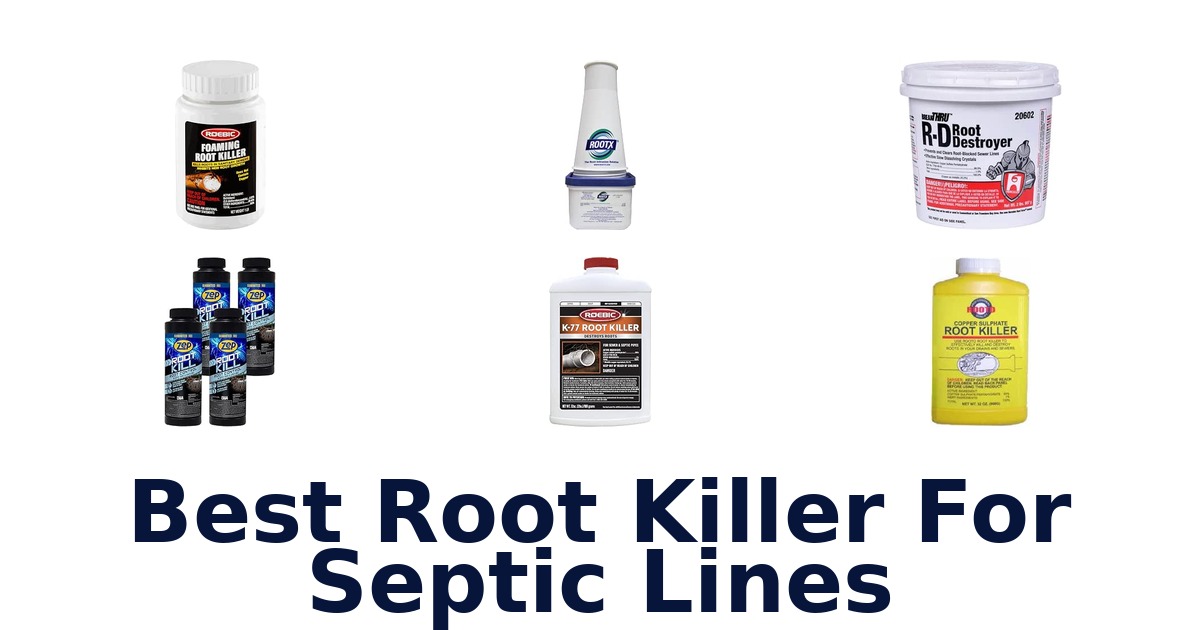
A strong root killer for septic lines targets roots inside pipes while matching the treatment method and directions to your system; Roebic K-77 is a useful starting point for homeowners who want a granular product explicitly listed for sewer and septic pipes. The options here include copper sulfate granules, foaming formulas, and products with stated septic or leach-line uses. They are not interchangeable: some labels prohibit application through sink or tub drains, and RootX says it will not immediately open a blocked sewer line.
Check the product label and your system’s access point before treating. This roundup ranks all 10 listed products by fit to septic-line use, then by the specificity of their supplied details and useful application information.
Roebic K-77 is the Best Overall choice because its product details explicitly say it clears roots in sewer and septic pipes, prevents regrowth, and is non-corrosive and safe for all types of plumbing. It comes as 32-ounce granules. For a buyer who prefers a product with a specified pipe-treatment coverage, RootX lists treatment for 50 feet of 4-inch pipe, though it also cautions that it will not immediately open a blocked line.
Always follow the individual product label.
Our Top Picks
 Best Overall
Its listed use explicitly covers sewer and septic pipes, and the 32-ounce granular copper formula is described as non-corrosive and safe for all plumbing.
View on Amazon Best Septic Directions
The copper sulfate granules are specified for septic and sewer pipe roots, with dosing based on tank size and guidance to treat when flow first drops.
View on Amazon Best Coverage Detail
The included funnel applicator and stated treatment for 50 feet of 4-inch pipe offer useful application guidance; its listing also covers septic systems.
View on Amazon- Best Leach-Field Fit ADIOS! Copper Sulfate
- Best Copper-Free Formula Green Gobbler Foaming Root Killer
Compare Root Killers by Form, Use, and Coverage
| # | Product | Weight | Form | Buy |
|---|---|---|---|---|
| 1 | 1. Roebic K-77Best Overall | 2 lb | Granule | View on Amazon |
| 2 | 2. Sanco Root DestroyerBest Septic Directions | 2 lb | Granules | View on Amazon |
| 3 | 3. RootX Foaming Root ControlBest Coverage Detail | 2 lb | — | View on Amazon |
| 4 | 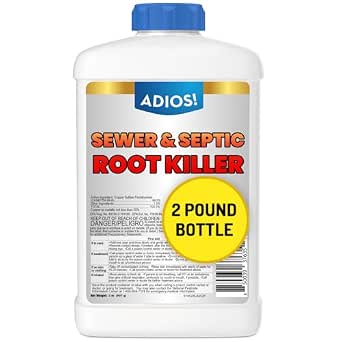 4. ADIOS! Copper SulfateBest Leach-Field Fit | 2 lb | Granule | View on Amazon |
| 5 |  5. Zep Root KillMulti-line root control | 9 lb | Granules | View on Amazon |
| 6 |  6. Green Gobbler Foaming Root KillerBest Copper-Free Formula | 4 lb | Powder | View on Amazon |
| 7 |  7. Roebic FRKFoam-on-contact pipe coverage | 16 oz | Granule | View on Amazon |
| 8 |  8. Thalictrum Root DestroyerCopper-sulfate line treatment | 2 lb | Granule | View on Amazon |
| 9 |  9. Hercules R-D Root DestroyerTwo-pack powder supply | 2 lb | Powder | View on Amazon |
| 10 |  10. Jensen Rooto Root KillerLiquid root-killer format | 2 lb | Liquid | View on Amazon |
Detailed Reviews: Best Root Killer For Septic Lines
#1 · Best Overall
1. Roebic K-77
- Weight: 2 lb
- Form: Granule
Best for: Copper-formula pipe maintenance.
Why it ranks #1: Its listed use explicitly covers sewer and septic pipes, and the 32-ounce granular copper formula is described as non-corrosive and safe for all plumbing.
Roebic K-77 uses a copper formula to kill roots at their point of entry into sewer and septic pipes, helping address intrusion where it starts. Its granular form and stated compatibility with all plumbing types make it a candidate for homeowners seeking root control without a corrosive treatment.
The copper formula targets roots where they enter pipes and is also described as preventing regrowth, linking treatment to improved drainage and flow. Roebic lists the product for both sewer and septic pipes, so it suits those line types rather than a general household drain treatment. Its granules come in a 32-ounce package. The safety information calls for keeping it away from children and avoiding skin and eye contact, so careful handling belongs in the application workflow.
- Copper formula kills roots at their point of entry
- Targets existing roots and helps prevent regrowth
- Listed for sewer and septic pipes
- Described as non-corrosive and safe for all plumbing types
- The safety directions require avoiding skin and eye contact.
Skip it if you need a foaming treatment that fills the pipe; Roebic FRK is the listed foam-on-contact option.
Choose K-77 if you want a granular copper treatment for roots in sewer or septic pipes and value its stated plumbing compatibility. Handle it carefully, following the label and the listed skin- and eye-contact precautions.
Full product details
| Brand | Roebic |
|---|---|
| Included Components | Roebic – 33051001771 |
| Item Form | Granule |
| Item Volume | 32 fluid ounces |
| Item Weight | 2 pounds |
| Manufacturer | Roebic Store |
| Material Feature | Non-Toxic, Unscented |
| Material Features | Non-Toxic, Unscented |
| Model Number | K-77-2LB |
| Package Size Name | 32 Ounce |
| Size | 32 Ounce (Pack of 1) |
| Special Features | Clears Clogs, Keeps System Running Smoothly |
| Warranty Description | Warranty |
Listed on Amazon as: Roebic K-77 Granular Tree Root Killer for Sewer Lines, 32 oz
View on Amazon#2 · Best Septic Directions
2. Sanco Root Destroyer
- Weight: 2 lb
- Form: Granules
Best for: Septic leach-line treatment.
Why it ranks #2: The copper sulfate granules are specified for septic and sewer pipe roots, with dosing based on tank size and guidance to treat when flow first drops.
Sanco Industries Root Destroyer uses copper sulfate crystals and targets roots inside septic and sewer lines while leaving the tree unharmed, according to its listing. It is particularly relevant when reduced flow first appears, since the product needs some flow to reach root growth and is not intended for sink or tub drains.
The directions tie dosage to septic tank size and the extent of root growth, making tank-specific calculation part of the treatment process. The listing says roots usually accumulate enough product over three to four weeks before dying and decaying, so flow improvement is not immediate. Copper sulfate temporarily reduces bacterial action, which is stated to return to normal about 15 days after treatment. Application is limited to roots inside the leach line; do not use sink or tub drains.
- Copper sulfate crystals target roots inside septic and sewer lines
- Listing says it will not harm the tree
- Dosage is calculated using tank size and root growth
- Treatment guidance specifies timing after reduced flow is noticed
- It temporarily reduces bacterial action, which returns to normal in about 15 days.
Skip it if you need a product for sink or tub drains; Roebic K-77 is listed for sewer and septic pipes.
Consider Sanco Root Destroyer when a septic or sewer line still has enough flow to carry treatment toward roots. Its leach-line focus and delayed three-to-four-week process make it a poor match for an already complete blockage.
Full product details
| Brand | Sanco Industries |
|---|---|
| Item Form | Granules |
| Item Weight | 2 pounds |
| Manufacturer | Sanco Industries |
| Model Number | 666 |
Listed on Amazon as: Root Destroyer – 2lbs- Root Killer for Sewer & Pipe Lines- Stops New Growth – Safe for All Plumbing
View on Amazon#3 · Best Coverage Detail
3. RootX Foaming Root Control
- Weight: 2 lb
Best for: Measured foaming line application.
Why it ranks #3: The included funnel applicator and stated treatment for 50 feet of 4-inch pipe offer useful application guidance; its listing also covers septic systems.
RootX includes a funnel applicator and treats 50 feet of four-inch pipe, giving buyers a defined coverage figure and an included application aid. The listing identifies it as foaming root control for sewer lines and septic systems, and its single-use jar format makes each treatment a one-application task.
The included funnel and applicator support directing the product into the line, while the stated 50-foot coverage applies to four-inch pipe. RootX says the jar is intended for a single-use application, which clarifies how to plan a treatment rather than store a partly used jar. It eliminates tree-root blockages but will not immediately open a blocked sewer line, so it is a control treatment rather than an immediate fix for a fully blocked pipe.
- Includes a funnel and applicator
- Treats 50 feet of four-inch pipe
- Foaming root control is listed for sewer and septic systems
- Jar is specified for a single-use application
- It will not immediately open a blocked sewer line.
Skip it if you need a treatment that opens a blocked sewer line immediately; RootX explicitly will not do that.
RootX suits buyers who can apply a measured, single-use foaming treatment to sewer or septic pipe and can work within its stated coverage. Do not rely on it for immediate relief from a blocked sewer line.
Full product details
| Brand | RootX |
|---|---|
| Color | White |
| Item Weight | 2 pounds |
| Item model number | RootX-2LB-With-Funnel |
| Manufacturer | RootX |
| Dimensions | 5 x 5 x 12.5 inches |
| Additional Information | Important information Safety Information See http://www.amazon.com/exec/obidos/tg/browse/-/3234041 for Proposition 65 warning |
Listed on Amazon as: 2LB. JAR with Funnel/APPLICATOR Foaming Root Control for Sewer Lines and Septic Systems
View on Amazon#4 · Best Leach-Field Fit
4. ADIOS! Copper Sulfate
- Weight: 2 lb
- Form: Granule
Best for: Broad septic-system root control.
Why it ranks #4: Its copper sulfate granules are listed for sewer, septic, drain, and leach fields, and the description cites bi-annual use to prevent regrowth.
ADIOS! uses an EPA-approved copper sulfate formula and lists applications spanning main lines, sewer and septic lines, drains, and leach fields. That range suits buyers addressing root intrusion across more than one part of a septic system, while its stated regrowth prevention supports ongoing line maintenance.
The copper sulfate granules target tree and shrub roots, with maple, pine, and oak specifically named among the tree types. Listed applications include main lines, sewer and septic lines, drains, and leach fields, giving the treatment broad system coverage. The product also states that it prevents regrowth, and the listing calls for bi-annual use. Its two-pound granule format is a straightforward fit for buyers following that recurring treatment schedule; use it as directed.
- EPA-approved copper sulfate formula
- Listed for main, sewer, septic, drain, and leach-field lines
- Targets tree and shrub roots, including maple, pine, and oak
- Listing specifies bi-annual use to prevent regrowth
- The listed maintenance schedule calls for treatment twice a year.
Skip it if you want a foam-on-contact treatment that fills pipes; Roebic FRK is described with that application behavior.
ADIOS! fits buyers seeking copper sulfate root control across sewer, septic, and leach-field areas, including named tree and shrub roots. Its stated twice-yearly schedule is a relevant consideration for ongoing maintenance.
Full product details
| Brand | ADIOS! |
|---|---|
| Included Components | Copper Sulfate |
| Item Form | Granule |
| Item Weight | 2 pounds |
| Manufacturer | Compare Brands |
| Model Number | 41CADI |
| Additional Information | Important information Safety Information Use as directed. Ingredients Copper Sulfate |
Listed on Amazon as: Copper Sulfate Tree Root Killer for Sewer Line and Pipes (2 Pounds)
View on Amazon#5
5. Zep Root Kill
- Weight: 9 lb
- Form: Granules
Best for: Multi-line root control.
Why it ranks #5: The granular product explicitly targets septic tank leach lines and pipes, with supplied timing guidance of about three to four weeks for roots to decay.
Zep Root Kill is listed for municipal sewer systems, septic tank leach lines, and leach-line pipes, giving buyers several relevant line applications in one granular formula. Its stated three-to-four-week root-decay timeline sets a maintenance expectation: this treatment aims to improve flow over time, not open a blockage immediately.
The granular copper sulfate treatment works on roots entering through cracks in poorly sealed pipe joints, connecting the target to a specific intrusion path. Zep says roots typically die and decay after accumulating sufficient product over three to four weeks, when water flow should increase. It also temporarily reduces bacterial action, which returns to normal in about 15 days. The listing warns against sink and tub drains because it can corrode metal drains, so route application carefully.
- Listed for municipal sewers, septic leach lines, and leach-line pipes
- Targets roots entering cracks in poorly sealed joints
- Describes a three-to-four-week root-decay process
- Granular formula is specified for root control
- It can corrode metal drains, so the listing forbids sink and tub application.
Skip it if you need a foaming treatment rather than granules; Roebic FRK foams on contact to fill pipes.
Zep suits buyers treating root intrusion in sewer systems or septic leach lines who can allow time for roots to decay. Keep it out of sink and tub drains, where its stated metal-corrosion risk matters.
Full product details
| Brand | Zep |
|---|---|
| Item Form | Granules |
| Item Weight | 9 pounds |
| Manufacturer | Zep |
Listed on Amazon as: Zep Root Kill – 2 Lbs (Case of 4) ZROOT24 – Root Control in Septic Tanks and Leach Lines
View on Amazon#6 · Best Copper-Free Formula
6. Green Gobbler Foaming Root Killer
- Weight: 4 lb
- Form: Powder
Best for: Copper-free foaming treatment.
Why it ranks #6: Its 4-pound foaming product is described as containing no copper sulfate and as safe for pipes, septic, soil, and trees when used properly.
Green Gobbler’s root-killer formula contains no copper sulfate, distinguishing it for buyers seeking a different chemistry for roots in pipes and sewer lines. The product is described as foaming and comes as a four-pound powder for two uses, with stated pipe, septic, soil, and tree safety when used properly.
The foaming formula is described as dissolving roots inside pipes and helping prevent regrowth, connecting its format with both root removal and follow-up control. Directions say to pour it into a toilet or sewer cleanout and ensure the correct amount reaches the roots. The listing states it is safe for pipes, septic, soil, and trees when used properly. Its two-use, four-pound supply gives buyers two applications, with maintenance directions intended to help prevent regrowth.
- Contains no copper sulfate
- Foaming formula helps dissolve roots in pipes and sewer lines
- Listing says it helps prevent regrowth
- Four-pound product is specified for two uses
- The directions require getting the correct amount to the tree roots.
Skip it if you need a named copper-sulfate crystal formula; Sanco Industries Root Destroyer lists copper sulfate crystals and septic-line use.
Green Gobbler fits buyers seeking a copper-sulfate-free foaming treatment for pipe or sewer-line roots, with two stated uses per package. Follow the directions closely, especially the instruction to get the correct amount to the roots.
Full product details
| Brand | Green Gobbler |
|---|---|
| Included Components | Foaming Root Killer |
| Item Form | Powder |
| Item Weight | 4 pounds |
| Manufacturer | Green Gobbler |
| Model Number | G8079 |
Listed on Amazon as: Green Gobbler, FOAMING Root Killer | Kills Tree Roots in Pipes & Sewer Lines | Contains No Copper Sulfate | Safe for Pipes and Septic – 2 USES, 4 LBS
View on Amazon#7
7. Roebic FRK
- Weight: 16 oz
- Form: Granule
Best for: Foam-on-contact pipe coverage.
Why it ranks #7: The 1-pound foaming formula is designed to fill pipes and inhibit new growth; supplied product details also reference septic systems and drain fields.
Roebic FRK foams on contact to fill pipes, a useful distinction for buyers seeking treatment distributed through a sewage line rather than a granular-only application. Its dichlobenil formula is described as inhibiting new root growth throughout the pipeline, while the listing says surrounding trees are not harmed during use.
The contact foam is intended to fill pipes and remove clogs, tying its application format to line coverage and backup prevention. The dichlobenil agent inhibits new root growth along the pipeline, so the stated purpose extends beyond removing existing root problems. This one-pound product is applied by pouring the full container into the toilet, according to the directions. The label must be followed, making the specified application route and instructions central to using it appropriately.
- Foams on contact to fill pipes
- Formula is described as removing clogs and preventing backups
- Dichlobenil inhibits new root growth throughout the pipeline
- Listing says surrounding trees are not harmed during use
- The directions specify using the entire one-pound container for an application.
Skip it if you want a copper-sulfate granular treatment; Zep Root Kill is listed in granular form for septic leach lines.
Choose Roebic FRK if you want a foam-on-contact approach for sewage-line root problems and pipeline regrowth control. Its directions call for the full container through a toilet, so follow the label and application route.
Full product details
| Brand | Roebic |
|---|---|
| Included Components | Roebic FRK Foaming Tree Root Killer, Chemical Septic System, Drain Field and Sew |
| Item Form | Granule |
| Item Weight | 16 ounces |
| Manufacturer | Roebic |
| Model Number | FRK-1LB |
| Warranty Description | Warranty |
Listed on Amazon as: Roebic FRK Foaming Tree Root Killer for Sewer Lines, 1 lb
View on Amazon#8
8. Thalictrum Root Destroyer
- Weight: 2 lb
- Form: Granule
Best for: Copper-sulfate line treatment.
Why it ranks #8: Its title identifies copper sulfate granules for sewer pipes and septic systems, but the supplied information provides little further application or performance detail.
Thalictrum Root Destroyer is identified as a two-pound copper sulfate root killer for sewer pipes and septic systems, giving buyers a clearly stated chemistry and use area. Its title also describes it as safe for all plumbing and tree- and shrub-friendly, relevant distinctions when choosing a line treatment.
The copper sulfate formulation connects this product to the root-control use stated in its title, while the named sewer-pipe and septic-system applications keep the intended context clear. The two-pound granular form gives it a dry application format rather than a liquid one. The title claims compatibility with all plumbing and friendliness to trees and shrubs; the supplied information does not provide a dose or treatment interval, so use directions should guide application.
- Copper sulfate root-killer formulation
- Named for sewer pipes and septic systems
- Two-pound product in granular form
- Title states it is safe for all plumbing and tree- and shrub-friendly
- The supplied product details do not specify a dosage or treatment interval.
Skip it if you need a listed three-to-four-week treatment timeline; Zep Root Kill provides that timing for roots to die and decay.
Thalictrum may suit buyers looking for a granular copper sulfate product named for sewer pipes and septic systems. Its supplied details do not give a dose or schedule, so those application specifics remain a necessary fit consideration.
Full product details
| Brand | Thalictrum |
|---|---|
| Included Components | Root Destroyer |
| Item Form | Granule |
| Item Weight | 2 pounds |
| Manufacturer | Thalictrum |
| Model Number | RE-2-XJ |
Listed on Amazon as: Root Destroyer – 2LBs Copper Sulfate Root Killer for Sewer Pipes & Septic Systems – Stops New Growth – Safe for All Plumbing – Tree & Shrub Friendly
View on Amazon#9
9. Hercules R-D Root Destroyer
- Weight: 2 lb
- Form: Powder
Best for: Two-pack powder supply.
Why it ranks #9: The listing provides a 2-pound powder and a 2-pack, but does not specify septic-line use or give further root-treatment directions in the supplied details.
Oatey Hercules R-D Root Destroyer is listed as a two-pound powder in a two-pack, a useful supply detail for buyers comparing package quantity. Its title identifies it as a root destroyer, but the supplied product information does not specify a sewer, septic, or leach-line application.
The powder form distinguishes this product from granular and liquid options in this roundup, while the two-pack title indicates that the purchase includes two units. The supplied specifications identify model 20602 and a two-pound item weight, but do not describe an application method, target line type, or treatment schedule. That limited information makes it difficult to assess compatibility with a particular septic-line workflow; check the product directions before choosing it for that use.
- Powder form is specified
- Title identifies it as a root destroyer
- Title states a two-pack quantity
- Model number is specified as 20602
- The supplied details do not identify a septic-line application or treatment directions.
Skip it if you need an explicitly listed septic-line treatment; Sanco Industries Root Destroyer names septic and sewer pipe roots.
Oatey Hercules R-D may interest buyers comparing a powder root destroyer supplied as a two-pack. The available details do not establish septic-line use or explain application, so it is a limited-information choice for this roundup.
Full product details
| Item Form | Powder |
|---|---|
| Item Weight | 2 pounds |
| Model Number | 20602 |
| Additional Information | Important information |
Listed on Amazon as: Oatey 20602 Hercules R-D Root Destroyer, 2-Pound – 2 Pack
View on Amazon#10
10. Jensen Rooto Root Killer
- Weight: 2 lb
- Form: Liquid
Best for: Liquid root-killer format.
Why it ranks #10: The supplied directions describe applying liquid directly to unwanted vegetation roots, not treating roots inside septic lines, so it is a poor fit for this search.
Rooto Root Killer is listed as a two-pound liquid, a format distinction for buyers comparing root-control products by physical form. Its supplied directions say to apply it directly to unwanted vegetation roots, but do not identify sewer lines, septic systems, or pipes as an application site.
The liquid form and direct-to-root directions point to an application on unwanted vegetation rather than a described in-pipe treatment workflow. The listing identifies Jensen as the brand and model 1185, with a two-pound item weight. Safety instructions say to keep it away from children and avoid skin and eye contact; because the supplied details do not specify septic-line use, those considering it for pipes lack that compatibility information here.
- Liquid item form is specified
- Directions say to apply directly to unwanted vegetation roots
- Two-pound item weight is listed
- Safety directions warn against skin and eye contact
- The supplied directions do not identify sewer or septic-line use.
Skip it if you need a product explicitly listed for septic pipes; Roebic K-77 is specified for sewer and septic pipes.
Rooto may fit a buyer seeking a liquid root killer for direct application to unwanted vegetation. For septic-line treatment, the supplied information does not establish pipe use, so that application boundary is important.
Full product details
| Brand | Jensen |
|---|---|
| Item Form | Liquid |
| Item Weight | 2 pounds |
| Model Number | 1185 |
| Additional Information | Important information Safety Information Keep out of reach of children. Avoid contact with skin and eyes. If ingested, seek medical help immediately. Directions Apply directly to roots of unwanted vegetation. Avoid contact with skin and eyes. If ingested, seek medical help immediately. |
Listed on Amazon as: 2LB Rooto Root Killer
View on AmazonWhat if the septic line is already blocked?
A root killer may not restore flow quickly enough to clear a fully blocked line. RootX explicitly says its product will not immediately open a blocked sewer line, while Sanco advises treating when reduced flow is first noticed and not waiting for a complete stoppage; it says some flow is needed to carry the product to root growth. Sanco also describes roots dying and beginning to decay after accumulating enough product, usually over three to four weeks.
Zep gives a similar three-to-four-week period before water flow should increase. These timelines mean chemical treatment is not an instant substitute for clearing a severe obstruction.
If wastewater is backing up or the line has stopped draining, do not assume that adding product will solve the immediate problem. Check the label and consider getting the blockage assessed before choosing a maintenance treatment.
Match the treatment to the access point
The application route matters because some products specifically warn against going through sink or tub drains. Sanco Root Destroyer says not to apply through those drains, and Zep Root Kill warns that doing so can corrode metal drains. By contrast, Roebic FRK directions say to pour the contents into the toilet, while RootX includes a funnel applicator and specifies treatment coverage for 50 feet of 4-inch pipe.
Those details do not make the products interchangeable: the appropriate access point and amount depend on the product label and the layout of the line. Also distinguish pipe treatment from septic-tank dosing.
RootX lists 8 pounds per 1,000-gallon septic tank as an additional fact, while its jar is described as a single-use application. Check the directions for the exact product and system before treating.
How to Choose a Septic-Line Root Killer
Septic and leach-line fit
Look for wording that names septic lines or leach lines, rather than relying on a general root-killer title. Roebic K-77 specifically lists sewer and septic pipes; Sanco Root Destroyer gives septic and sewer pipe directions, and Zep Root Kill names septic tank leach lines and leach-line pipes. ADIOS!
also lists septic systems, drain fields, and leach fields. By comparison, the supplied Hercules R-D details do not specify septic use, and Jensen Rooto describes application to unwanted vegetation roots.
Buyers treating a confirmed septic-line intrusion should favour products with explicit septic or leach-line wording. If you only know that roots are present somewhere on the property, first identify the affected line and check that the selected product label covers that use.
Granules or foaming formula
Choose the application form that fits the product directions and access point you can use. Several options are granules, including Roebic K-77, Sanco Root Destroyer, and Zep Root Kill; the listings identify Roebic FRK and Green Gobbler as foaming root killers. RootX is supplied with a funnel applicator and states coverage for 50 feet of 4-inch pipe.
Foaming products may appeal to someone comparing formulas intended to fill pipes, while granules suit buyers following a granular product’s specified dosing directions. Do not infer that a form alone guarantees better reach or compatibility.
The best match depends on your line and the label’s permitted route; Sanco and Zep, for example, specifically caution against application through sink or tub drains.
Treatment amount and timing
Compare the stated quantity and treatment guidance, not just the package weight. The listings range from Roebic FRK at 1 pound to Green Gobbler at 4 pounds; many others list 2-pound products, and Green Gobbler describes its package as two uses. RootX gives coverage for 50 feet of 4-inch pipe, while Sanco says to calculate dosage based on septic tank size and root growth.
Sanco and Zep both describe a roughly three-to-four-week period for roots to die and decay after accumulating sufficient product. Buyers with a known line length should favour products with relevant coverage directions; buyers dosing by tank size should follow the product’s tank-specific instructions.
Package weight alone does not establish how much to apply or how often.
Which Root Killer Fits My Septic Line?
For a straightforward septic-line choice, start with Roebic K-77: it explicitly targets roots in sewer and septic pipes and is described as safe for all plumbing. If you want granular copper sulfate with septic dosing guidance, Sanco Root Destroyer is the clearest alternative; its directions say to calculate dosage from tank size and treat when flow first drops. For a stated pipe coverage and an included funnel, consider RootX Foaming Root Control, while remembering it will not immediately open a blocked line.
If your concern is a leach field, ADIOS! Copper Sulfate specifically lists septic, drain, and leach fields.
Choose Green Gobbler Foaming Root Killer if avoiding copper sulfate is important, as its description says the formula contains none. For a complete blockage, do not rely on any product here as an immediate fix.
Frequently Asked Questions
How can I tell whether roots, rather than another problem, are causing a septic-line blockage?
Recurring slow drains or backups can point to a blockage, but they do not identify its cause. Roots are only one possibility; buildup, damaged pipes, or other obstructions can produce similar symptoms. A qualified septic or plumbing professional can inspect the line and determine whether roots are present before you choose a treatment.
Should I use a root killer if my septic line is completely blocked?
No—do not rely on root killer to immediately clear a completely blocked line. RootX specifically cautions that it will not immediately open a blocked line, and root treatments are not a substitute for urgent diagnosis. Contact a septic or plumbing professional to assess the blockage, then follow product-label directions if treatment is appropriate.
How do I apply root killer without harming my septic system or nearby plants?
Follow the individual product label, including its application and septic-system directions; do not assume products have interchangeable doses or precautions. Sanco Root Destroyer directs users to calculate dosage from tank size and treat when flow first drops. Check the label for plant cautions, and avoid applying more than directed.
Which option has a stated pipe-treatment coverage?
RootX Foaming Root Control lists treatment for 50 feet of 4-inch pipe and includes a funnel. Its product guidance also says it will not immediately open a blocked line. Compare that stated coverage with your pipe conditions, and follow the label rather than assuming the same coverage applies to another product.
What should I choose if I want to avoid copper sulfate?
Green Gobbler Foaming Root Killer is the clearest listed option for that preference: its description says the formula contains no copper sulfate. Check the full product label for application directions and precautions, and do not assume that copper-free means appropriate for every blockage or septic-line condition.
Final Words
For a straightforward septic-line choice, start with Roebic K-77: its product details explicitly target roots in sewer and septic pipes and describe it as safe for all plumbing. Choose Sanco Root Destroyer if you want granular copper sulfate with septic dosing guidance, or RootX for stated pipe coverage. Consider Green Gobbler if avoiding copper sulfate matters.
Follow the product label, and get professional help for a complete blockage.