
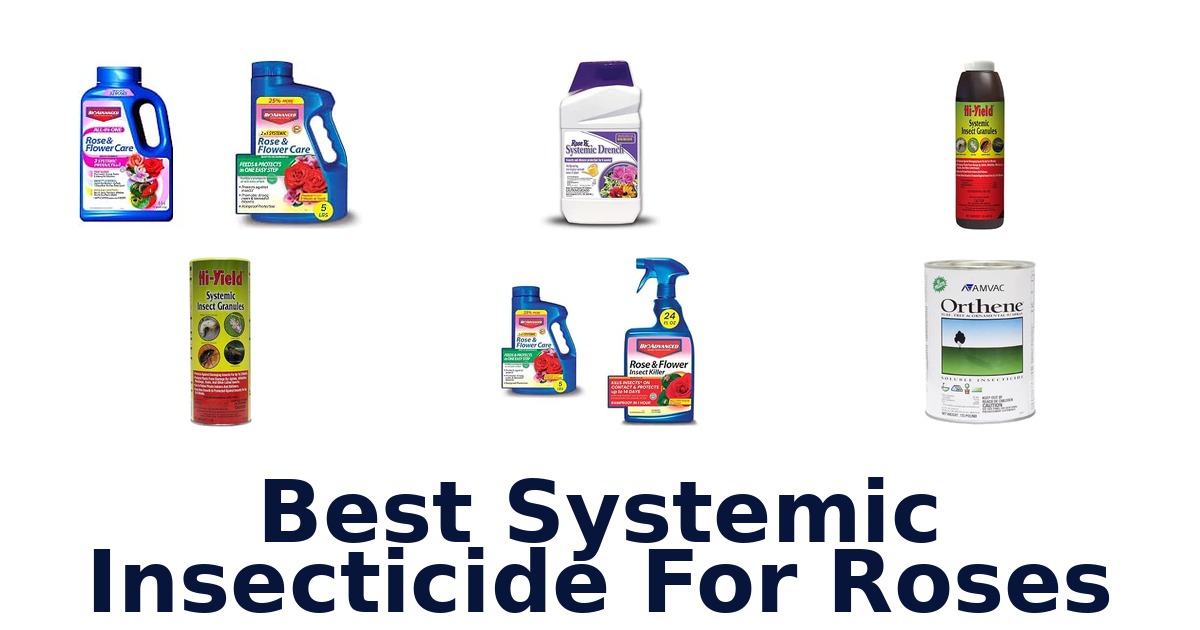
A strong systemic insecticide for roses protects against listed pests through root uptake, and the best fit depends on whether you also need disease control, fertilizer, or a no-spray application. Bonide Rose Rx Systemic Drench is a focused option with up to six weeks of insect and disease protection; granules may suit gardeners who prefer applying product to the soil. This roundup compares ten products, including rose-specific drenches, all-in-one care formulas, and broader landscape insecticides.
Check each label for approved plants, pests, application rates, and safety directions before use. Protection claims and formats vary: listed coverage ranges from six weeks to up to two months, while one product combines fertilizer, insect, and disease control.
The rankings prioritize clear rose use and useful product details.
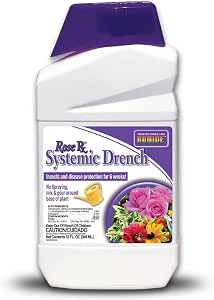
Bonide Rose Rx Systemic Drench is the best overall fit for rose growers seeking a straightforward systemic treatment. Its product information specifies up to six weeks of insect and disease control, lists pests including aphids and Japanese beetles, and says one quart treats up to 16 roses. It is poured at the plant base, so it avoids spraying.
Choose another option if you specifically want granules, fertilizer, or a longer stated protection period; follow the product label for application and plant suitability.
Our Top Picks
 Best Overall
Rose-focused drench offers up to six weeks of insect and disease control, lists Japanese beetles and aphids, and treats up to 16 roses per quart.
View on Amazon Best Disease Coverage
Its systemic concentrate protects roses from insects and diseases for six weeks, including aphids, borers, thrips, black spot, and rust.
View on Amazon Best All-in-One
BioAdvanced All-in-One Granules
Combines fertilizer, insect control, and disease control in granules, with systemic rainproof protection lasting up to six weeks.
View on Amazon- Longest Stated Protection BioAdvanced Care II Bundle
- Best Granule Duration Hi-Yield Systemic Granules
Compare Rose Systemic Insecticide Options
| # | Product | Weight | Form | Buy |
|---|---|---|---|---|
| 1 | 1. Bonide Rose Rx DrenchBest Overall | 2.4 lb | — | View on Amazon |
| 2 | 2. Fertilome 2-N-1 SystemicBest Disease Coverage | 0.27 g | Liquid | View on Amazon |
| 3 | 3. BioAdvanced All-in-One GranulesBest All-in-One | 4 lb | Granules | View on Amazon |
| 4 |  4. BioAdvanced Rose Care BundleTwo-stage rose care supply | 4 lb | Granules | View on Amazon |
| 5 |  5. BioAdvanced Care II BundleLongest Stated Protection | — | Granules | View on Amazon |
| 6 | 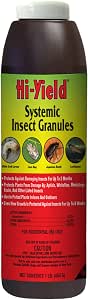 6. Hi-Yield Systemic GranulesBest Granule Duration | 16 oz | Granules | View on Amazon |
| 7 | 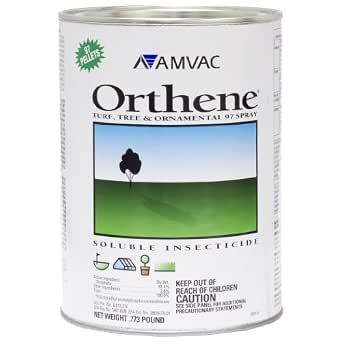 7. Orthene Acephate InsecticideBroad listed rose-pest coverage | 15.68 oz | Spray | View on Amazon |
| 8 |  8. Bayer Merit Granular ControlLarge landscape granular treatment | 30.1 lb | Granules | View on Amazon |
| 9 |  9. Bonide Systemic Insect ControlBonide systemic concentrate option | 16 oz | Spray | View on Amazon |
| 10 |  10. Fertilome Systemic GranulesFerti-lome systemic granule format | 1.1 lb | Granules | View on Amazon |
Detailed Reviews: Best Systemic Insecticide For Roses
#1 · Best Overall
1. Bonide Rose Rx Drench
- Weight: 2.4 lb
Best for: Pour-on rose and flower beds.
Why it ranks #1: Rose-focused drench offers up to six weeks of insect and disease control, lists Japanese beetles and aphids, and treats up to 16 roses per quart.
A base-of-plant drench provides Bonide Rose Rx’s insect and disease protection without messy spraying, making it a fit for gardeners treating roses or a full flowerbed. The product states up to six weeks of coverage and says one quart treats up to 16 roses.
The pour-at-the-base application avoids a spray step, while the stated six-week protection period gives gardeners a clear interval to consider when planning care. Its listed targets include insects such as Japanese beetles, borers, and aphids, plus diseases including black spot, powdery mildew, and rust. Bonide also lists use on full flowerbeds, azaleas, camellias, and other shrubs, extending its stated scope beyond roses.
- Provides insect and disease protection for up to six weeks.
- Application is poured along the plant base; spraying is not required.
- One quart treats up to 16 roses, according to the description.
- Listed for roses, flowerbeds, azaleas, camellias, and other shrubs.
- The supplied facts describe a concentrate but do not state its dilution instructions.
Skip it if you want a fully stated mixing recipe before application; the supplied facts give treatment coverage but not dilution directions.
Choose this drench if you want a no-spray routine for roses, flowerbeds, or listed shrubs and value stated coverage for up to 16 roses per quart. Its supplied information does not include the mixing recipe.
Full product details
| Brand | Bonide |
|---|---|
| Included Components | Bonide Rose Rx Systemic Drench Concentrate, 32 oz |
| Item Weight | 2.4 pounds |
| Manufacturer | Arett Sales – LG |
| Model Number | 9636 |
Listed on Amazon as: Bonide Rose Rx Systemic Drench, 32 oz
View on Amazon#2 · Best Disease Coverage
2. Fertilome 2-N-1 Systemic
- Weight: 0.27 g
- Form: Liquid
Best for: Mix-and-pour systemic concentrate.
Why it ranks #2: Its systemic concentrate protects roses from insects and diseases for six weeks, including aphids, borers, thrips, black spot, and rust.
A concentrate that mixes with water and pours at the plant base gives rose growers a systemic insecticide-and-fungicide routine without spraying leaves. Ferti-lome states protection for up to six weeks and lists roses, flowers, and shrubs, with coverage described as including new growth.
The two-in-one concentrate addresses insects and diseases, with listed examples including aphids, borers, thrips, black spot, and rust. Mixing with water at label rates lets the gardener prepare a treatment for the intended plants; the supplied rates specify two fluid ounces in one quart of water for one rose. For flower beds, the same amount in two gallons treats 12 square feet. Application is poured near the base, avoiding leaves.
- Combines insecticide and fungicide in one concentrate.
- Provides protection for up to six weeks, according to the listing.
- Specified rose rate is two fluid ounces in one quart of water per plant.
- Base application is described as protecting the entire plant, including new growth.
- Preparing the treatment requires mixing concentrate with water at label rates.
Skip it if you prefer ready-to-apply granules rather than measuring and mixing liquid concentrate before treating roses.
This suits rose growers comfortable mixing a concentrate who want insect and disease control applied around the plant base. Use the stated rose rate as a reference, and follow the label for the complete application directions.
Full product details
| Brand | ferti-lome |
|---|---|
| Item Form | Liquid |
| Item Weight | 0.27 g |
| Manufacturer | Arett Sales – LG |
| Model Number | 10478 |
| Special Features | organic |
| Warranty Description | Warranty |
| Additional Information | Important Information Proposition 65 Warning for California Consumers WARNING: Cancer and Reproductive Harm – www.P65Warnings.ca.gov |
Listed on Amazon as: Fertilome (10478) 2-N-1 Systemic Insecticide + Fungicide, 32 oz
View on Amazon#3 · Best All-in-One
3. BioAdvanced All-in-One Granules
- Weight: 4 lb
- Form: Granules
Best for: Rose beds needing three-way care.
Why it ranks #3: Combines fertilizer, insect control, and disease control in granules, with systemic rainproof protection lasting up to six weeks.
Fertilizer, insect control, and disease control share one systemic granule formula, so rose growers can address several care needs in a single application routine. BioAdvanced lists rainproof protection for up to six weeks and use on roses, flowers, and named shrubs including azaleas and camellias.
The granules combine plant food with insect and disease control, which suits gardeners who want those functions together rather than separate products. The supplied description says application requires no spraying, making it a pour-and-apply option for listed plants. Rainproof systemic protection lasts up to six weeks, giving the treatment a defined coverage window. Use is not limited to roses: the listed plants also include iris, hibiscus, azaleas, camellias, and rhododendrons.
- Combines fertilizer, insect control, and disease control.
- Systemic rainproof protection lasts up to six weeks.
- No spraying is required, according to the description.
- Listed for roses, iris, hibiscus, azaleas, camellias, and rhododendrons.
- The supplied facts do not specify a treatment amount per rose.
Skip it if you need a stated per-plant dose before choosing; the supplied product information gives no application amount for an individual rose.
A practical match for rose gardeners who want feeding plus systemic insect and disease care without spraying, and who also tend the listed flowers or shrubs. Check the product directions for application amounts, which are not given in the supplied facts.
Full product details
| Brand | BioAdvanced |
|---|---|
| Included Components | Bottle |
| Item Form | Granules |
| Item Weight | 4 pounds |
| Manufacturer | SBM Life Science |
| Model Number | 701116E |
| Special Features | Breathable |
| Warranty Description | Warranty |
Listed on Amazon as: BioAdvanced All-in-One Rose and Flower Care I Granules – 4 lb Bottle
View on Amazon#4
4. BioAdvanced Rose Care Bundle
- Weight: 4 lb
- Form: Granules
Best for: Two-stage rose care supply.
Why it ranks #4: The bundle includes two systemic rose-care granule products, with listed insect and disease control and protection claims of up to six and eight weeks.
This BioAdvanced bundle pairs a four-pound all-in-one rose and flower granule product with five pounds of two-in-one care, offering two systemic options for gardeners managing multiple planting needs. The first is listed for insect and disease control; the second adds feeding and insect protection with an eight-week window.
The four-pound component combines plant food, insect control, and disease control, with rainproof protection stated for up to six weeks and coverage for up to 32 roses. The five-pound component feeds roses and flowers while providing systemic protection against listed insects for up to eight weeks. Together, these granules give gardeners distinct all-in-one and feeding-plus-insect-control formulations to allocate across their rose and flower care routine.
- Bundle includes separate four-pound and five-pound granule products.
- One component combines plant food, insect control, and disease control.
- The all-in-one component treats up to 32 roses, according to the listing.
- The second component states systemic insect protection for up to eight weeks.
- The supplied facts do not specify how to divide the two products across a treatment schedule.
Skip it if you want one clearly specified product and schedule; the bundle supplies two formulations but no combined treatment plan.
This bundle fits gardeners who want both all-in-one disease and insect control and a separate feeding-plus-insect-care option. Its two formulations have different stated coverage periods, so follow each product’s label rather than assuming one schedule.
Full product details
| Brand | BioAdvanced |
|---|---|
| Item Form | Granules |
| Item Weight | 4 pounds |
| Manufacturer | BioAdvanced |
| Special Feature | organic |
| Special Features | organic |
Listed on Amazon as: BioAdvanced All-in-One Rose and Flower Care, Granules, 4 lb with BioAdvanced 2-in-1 Systemic Rose and Flower Care II, Granules, 5 lb
View on Amazon#5 · Longest Stated Protection
5. BioAdvanced Care II Bundle
- Form: Granules
Best for: Eight-week feeding and pest care.
Why it ranks #5: Its 2-in-1 granules claim rainproof systemic protection for up to eight weeks and include a ready-to-use insect killer for contact use.
One application of systemic granules feeds roses and flowers while protecting against listed insects for up to eight weeks, giving gardeners a combined feeding-and-control step. This BioAdvanced listing also includes a ready-to-use insect killer for contact treatment, creating two distinct application formats in the package.
The five-pound granule component feeds plants and is described as absorbing through roots, linking the application to strong roots and blooms while providing systemic pest protection. Its stated coverage lasts up to eight weeks and includes pests such as aphids, Japanese beetles, lace bugs, leafhoppers, and whiteflies. The included 24-ounce ready-to-use insect killer adds a contact-control format; its listed targets include caterpillars and Japanese beetles. The two formats support different treatment approaches.
- Granules combine feeding with insect protection.
- Systemic rainproof protection lasts up to eight weeks.
- One application is stated to protect against listed pests.
- Package also includes a ready-to-use contact insect killer.
- The supplied facts do not state how many roses the granules treat.
Skip it if you need a stated per-rose coverage amount to plan a treatment; the supplied facts do not provide one for this granule package.
A fit for rose and flower growers seeking an extended systemic granule treatment plus a ready-to-use contact product. Consider the two-format approach if both suit your routine; the listing does not state a per-plant treatment amount.
Full product details
| Brand | BioAdvanced |
|---|---|
| Item Form | Granules |
| Manufacturer | BioAdvanced |
Listed on Amazon as: BioAdvanced 2-in-1 Systemic Rose and Flower Care II, Granules, 5 lb with BioAdvanced Rose and Flower Insect Killer, Ready-to-Use, 24 oz
View on Amazon#6 · Best Granule Duration
6. Hi-Yield Systemic Granules
- Weight: 16 oz
- Form: Granules
Best for: Container roses needing granules.
Why it ranks #6: Granules are listed for roses, absorb through roots, and provide up to two months of protection against listed pests.
Root-absorbed granules protect roses, flowers, shrubs, and containerized plants for up to two months, making this a useful format for gardeners avoiding repeated surface treatments. Hi-Yield states that protection moves through the entire plant and covers new growth for up to eight weeks.
The application is worked lightly into the top soil layer, so the treatment becomes part of the plant’s growing medium rather than a foliar spray. Root absorption moves the insecticide through the plant, with the listing stating protection for new growth as well as existing growth for up to eight weeks. Listed uses include indoor and outdoor containerized plants, roses, flowers, and shrubs, but edible plants are expressly excluded.
- Protection lasts up to two months, according to the listing.
- Root absorption moves protection through the entire plant.
- New growth is stated to be protected for up to eight weeks.
- Listed for indoor and outdoor container plants, roses, flowers, and shrubs.
- The product is not for edible plants.
Skip it if you plan to use the treated area for edible plants; this product’s listed directions exclude edible plants.
Choose these granules for roses or listed container plants when a root-absorbed treatment and up to eight weeks of protection fit your routine. Do not use them on edible plants, which the supplied facts exclude.
Full product details
| Brand | Hi-Yield |
|---|---|
| Included Components | B005DF75SM |
| Item Form | Granules |
| Item Weight | 16 ounces |
| Manufacturer | Hi-Yield |
| Model Number | 31228 |
| Special Features | Long-Lasting |
| Additional Information | Important information Safety Information safety_warning Directions Not_Applicable |
Listed on Amazon as: Hi-Yield (31228) Systemic Insect Granules, 1 lbs
View on Amazon#7
7. Orthene Acephate Insecticide
- Weight: 15.68 oz
- Form: Spray
Best for: Broad listed rose-pest coverage.
Why it ranks #7: The product lists common rose pests including aphids, Japanese beetles, rose budworm, and flower thrips, though its description emphasizes broader uses.
A long list of named rose pests distinguishes Orthene’s acephate insecticide, including aphids, Japanese beetles, rose budworm, and several leafrollers. The product is described as a soluble systemic insecticide for turf, trees, and ornamentals, making its broad target list relevant to growers checking specific pest concerns.
The listing specifies 97.4% acephate and identifies the product as soluble, while its stated use areas include turf, trees, and ornamentals. For rose growers, the supplied pest list names aphids, Japanese beetles, tent caterpillars, rose budworm, earwigs, scale, whitefly, and flower thrips, among others. This detail can help buyers compare a known pest problem against the listed targets, but the supplied facts do not give a rose application rate or duration.
- The supplied list names multiple rose pests, including aphids and rose budworm.
- Identified as a systemic soluble insecticide.
- Acephate concentration is listed as 97.4%.
- Stated use areas include turf, trees, and ornamentals.
- The supplied facts do not state a rose-specific application rate or protection duration.
Skip it if you need a supplied rose dosing rate or stated coverage interval; this listing names pests but gives neither for roses.
This is for gardeners comparing a named pest list against a specific rose problem, especially where listed targets include aphids or rose budworm. Consult the product label for rose-specific directions, since the supplied facts omit rates and duration.
Full product details
| Brand | Orthene |
|---|---|
| Included Components | 1 bottle |
| Item Form | Spray |
| Item Weight | 15.68 ounces |
| Manufacturer | AMVAC |
| Model Number | de-mouse-8h-50 |
Listed on Amazon as: Orthene 97.4% Acephate 0.773lb Systemic Soluble Insecticde for Turf, Tree & Ornamentals
View on Amazon#8
8. Bayer Merit Granular Control
- Weight: 30.1 lb
- Form: Granules
Best for: Large landscape granular treatment.
Why it ranks #8: Granules are listed for flowers and landscape ornamentals and control pests including aphids and Japanese beetles, but rose-specific directions are not supplied.
A 30-pound granular package supports landscape-scale handling, with listed use around turfgrass, trees, shrubs, evergreens, flowers, foliage plants, and ground covers. Merit 0.5 targets a broad range of landscape insects, including aphids and Japanese beetles, though the supplied facts emphasize landscape ornamentals rather than a rose-specific treatment.
The granules are identified for systemic insect control in turfgrass and landscape ornamentals, so the product’s stated scope can suit gardeners managing more than a few roses. Its listed uses include flowers and shrubs, and named pests include aphids, Japanese beetles, lace bugs, and leafhoppers, among others. The 30-pound bag is a substantial quantity for broader landscape work; the supplied information does not give a rose-specific dose or protection duration.
- Granular systemic insect control is specified for landscape ornamentals.
- Listed uses include flowers and shrubs as well as turfgrass.
- Pest list includes aphids, Japanese beetles, lace bugs, and leafhoppers.
- The package contains 30 pounds of granules.
- The supplied facts do not provide a rose-specific application rate.
Skip it if you are treating only a few roses and need a stated per-plant dose; the listing does not supply one.
A possible fit for gardeners managing roses as part of a wider ornamental landscape and comparing the listed pests with their needs. Its 30-pound bag and missing rose-specific rate make it less straightforward for small, precisely measured treatments.
Full product details
| Brand | Bayer |
|---|---|
| Included Components | 1 bag |
| Item Form | Granules |
| Item Weight | 30.1 pounds |
| Manufacturer | Backed by Bayer |
| Model Number | 09090530 |
Listed on Amazon as: Bayer – Merit 0.5 Granular Systemic Insect Control – 30 Pound Bag
View on Amazon#9
9. Bonide Systemic Insect Control
- Weight: 16 oz
- Form: Spray
Best for: Bonide systemic concentrate option.
Why it ranks #9: This is a systemic insect-control concentrate, but the supplied details do not specify rose use, target pests, or protection duration.
Bonide’s 16-ounce product is identified as a systemic insect-control concentrate, giving gardeners a liquid format to consider for insect treatment. The supplied listing provides the product name and form but no rose-specific targets, protection duration, application directions, or treatment rate to guide a more detailed comparison.
The concentrate format distinguishes this product from granules, but the supplied facts do not explain how it is mixed or applied. The listing identifies it as Bonide 941 Systemic Insect Control and specifies a 16-ounce container; it does not provide a rose-use statement, named insect targets, or a protection period. That limited information means rose growers should rely on the product label for whether and how it suits their plants before proceeding.
- Identified as a systemic insect-control concentrate.
- Liquid form is specified in the product details.
- Bonide 941 product identity is supplied.
- The listed container size is 16 ounces.
- The supplied listing gives no rose-specific application directions or insect targets.
Skip it if you need documented rose pests, application rates, or protection duration in the supplied product details before selecting an insecticide.
Consider this only if you are evaluating Bonide’s systemic concentrate format and can consult its label for rose eligibility and directions. The supplied information does not establish target pests, application steps, or duration.
Full product details
| Brand | Bonide |
|---|---|
| Included Components | PESTICIDE |
| Item Form | Spray |
| Item Weight | 16 ounces |
| Manufacturer | Bonide Product |
| Model Number | 941 |
| Warranty Description | Warranty |
| Additional Information | Important Information Proposition 65 Warning for California Consumers WARNING: Cancer and Reproductive Harm – www.P65Warnings.ca.gov |
Listed on Amazon as: Systemic Insect Cntrl Conc Pt Ca
View on Amazon#10
10. Fertilome Systemic Granules
- Weight: 1.1 lb
- Form: Granules
Best for: Ferti-lome systemic granule format.
Why it ranks #10: The listing identifies systemic insect granules but provides no rose-use directions, target pests, or duration to support a stronger fit.
Ferti-lome 10519 is identified as a one-pound systemic insect granule product, giving rose growers a dry-format option to investigate for insect control. The supplied listing names the product and its form but does not provide rose-use details, target insects, application instructions, or a protection duration.
The granule form distinguishes this listing from liquid concentrates, and the stated package weight is 1.1 pounds. Beyond identifying it as a systemic insect product, the supplied facts do not name pests, specify use on roses, or describe how to apply the granules. That leaves important decisions about rose eligibility and treatment method dependent on the product label rather than the listing information provided here.
- Identified as a systemic insect product.
- Granules are the specified item form.
- Ferti-lome 10519 product identity is supplied.
- The listed item weight is 1.1 pounds.
- The supplied facts do not identify target insects or rose application directions.
Skip it if you need confirmed rose use, named pests, or application directions in the supplied details before choosing a systemic product.
This may suit a buyer specifically comparing Ferti-lome’s systemic granule format, provided the label confirms rose use and directions. The supplied listing does not establish target pests, application method, or protection duration.
Full product details
| Brand | ferti-lome |
|---|---|
| Included Components | VPG FERTILOME 10519 1Lb Systemic Gran Insect |
| Item Form | Granules |
| Item Weight | 1.1 pounds |
| Manufacturer | VPG FERTILOME |
| Model Number | 10519 |
| Warranty Description | Warranty |
| Additional Information | Important Information Proposition 65 Warning for California Consumers WARNING: Cancer and Reproductive Harm – www.P65Warnings.ca.gov |
Listed on Amazon as: VPG FERTILOME 10519 1Lb Systemic Gran Insect
View on AmazonWhy systemic treatment may not solve every rose problem
Systemic products can miss the cause of damage when symptoms are mistaken for insect injury or when the needed control is not listed. These products illustrate the distinction: several combine insect and disease control, while others, such as Hi-Yield Systemic Granules, are described for insect pests only. A product listing aphids does not establish that it controls every aphid species or every rose problem; likewise, a disease-control claim does not mean it addresses all fungal symptoms.
Identify the pest or disease and compare it with the complete label before choosing. Also, protection periods are limited claims, not a guarantee that damage cannot occur: listed spans run from six weeks for several options to up to two months for Hi-Yield Systemic Granules.
Repeated or off-label applications are not a substitute for checking the label. If the issue is unclear, avoid treating by guesswork and seek reliable plant-diagnosis guidance.
Match the application format to the rose planting
The application format can be a compatibility trap, especially when treating a bed rather than individual plants. Bonide Rose Rx Drench is poured around the plant base, and its listing says one quart treats up to 16 roses; Fertilome 2-N-1 Systemic gives different directions for individual roses and flower beds. Granules work differently: Hi-Yield Systemic Granules are applied over soil and lightly cultivated, while BioAdvanced All-in-One Granules are presented as a no-spray option.
Do not assume that products with similar names or formats share application rates. The BioAdvanced bundles also include distinct products, including a ready-to-use contact insect killer, so the components are not interchangeable directions for the systemic granules.
Confirm the label covers the exact plant and planting situation, then follow its rate and placement instructions. This matters most for mixed beds, containerized plants, and gardeners choosing between individual-plant dosing and broader bed treatment.
How to Choose a Systemic Insecticide for Roses
Insect-only or combined disease control
Look for an explicit disease-control claim if black spot, rust, or powdery mildew is part of the problem. Bonide Rose Rx Drench and Fertilome 2-N-1 Systemic both claim insect and disease protection for up to six weeks; BioAdvanced All-in-One Granules combine fertilizer, insect control, and disease control. Hi-Yield Systemic Granules, by contrast, are described as controlling listed insect pests, without a disease-control claim in the supplied details.
A combined product suits someone addressing listed insect and disease concerns together, while an insect-focused granule better fits a buyer whose target is a listed pest and who does not need a product with stated fungicide coverage. Check the complete label for the specific pest and disease before deciding.
Protection period and application format
Compare the stated protection span alongside how the product is applied. Several options, including Bonide Rose Rx Drench, Fertilome 2-N-1 Systemic, and BioAdvanced All-in-One Granules, state up to six weeks; Hi-Yield Systemic Granules claim up to two months, and BioAdvanced Care II Bundle claims up to eight weeks. Drenches are poured around the base, while granules are applied to soil; BioAdvanced Care II Bundle also includes a ready-to-use contact insect killer.
A gardener prioritizing the longest stated span may prefer Hi-Yield, while someone avoiding spraying and wanting a focused rose drench may prefer Bonide. Treat these as label claims, not guarantees, and follow each product’s own directions.
Rose-specific directions and treatment scale
Choose a product whose label explicitly covers roses and suits the scale of the planting. Bonide Rose Rx Drench states that one quart treats up to 16 roses, while Fertilome 2-N-1 Systemic gives a rate of two fluid ounces in one quart of water for one rose and separate flower-bed directions. BioAdvanced All-in-One Granules state that the four-pound product treats up to 32 roses.
Hi-Yield lists roses and containerized plants, but says not to use it on edible plants. These differences matter more than package size alone: a few individual plants may suit a measured drench, while a larger bed may favor a labeled granule or bed-treatment rate.
Verify the exact label before applying, particularly for mixed plantings or containers.
Which Systemic Insecticide Should Rose Growers Choose?
For most rose growers wanting a specific, no-spray treatment with both insect and disease coverage, choose Bonide Rose Rx Drench: it claims up to six weeks of protection and treats up to 16 roses per quart. For a measured concentrate with named insect and disease targets, Fertilome 2-N-1 Systemic is a strong alternative. Choose BioAdvanced All-in-One Granules if you want fertilizer included with insect and disease control, or Hi-Yield Systemic Granules if you prefer granules and its listed up-to-two-month insect protection suits your needs.
The BioAdvanced Care II Bundle may appeal if you want its stated eight-week systemic protection plus a ready-to-use contact product. Match the selected product to its labeled rose use, target pest, and application directions before treating.
Frequently Asked Questions
When should systemic insecticide be applied to roses?
Apply only when the product label permits use on roses and the pest or problem matches its listed uses. Check the label for timing, application method, and any restrictions, especially around flowering. If the label does not clearly cover your rose variety or situation, do not assume the product is suitable.
Can systemic insecticides harm bees or other pollinators?
They may pose risks to pollinators, so check the product label for pollinator warnings and restrictions before treating. Follow any directions about flowering plants, application timing, and keeping pollinators away. Do not apply a product to blooming roses unless its label specifically allows that use under the stated conditions.
How can I tell whether a rose pest or disease needs treatment?
Identify the problem before choosing a treatment: inspect leaves, stems, and buds for visible pests or signs of disease, then compare what you find with the product’s listed targets. Avoid treating based on uncertain symptoms alone. If you cannot identify the cause, seek reliable local guidance before applying an insecticide or fungicide.
Should I choose a drench, granules, or a ready-to-use spray?
Choose the format that matches your application preference and the label directions. The Bonide drench is poured at the plant base, while several listed options are granules; the BioAdvanced bundle also includes a ready-to-use contact product. Check each label for rose suitability, target pests, and application instructions before deciding.
Can every systemic insecticide in this roundup be used on roses?
No—do not assume that a product is suitable for roses just because it is systemic or appears in this roundup. Some titles describe use on turf, trees, or ornamentals rather than specifically on roses. Confirm that the label permits use on your rose plants and covers the pest you have identified.
Final Words
For a straightforward, no-spray treatment with stated insect and disease coverage, Bonide Rose Rx Systemic Drench is the best overall fit in this roundup. Consider Fertilome 2-N-1 when you want a measured concentrate, BioAdvanced All-in-One when fertilizer is part of your preference, or Hi-Yield when you want granules. Before applying any option, verify rose suitability, target pests, timing, and restrictions on its label.